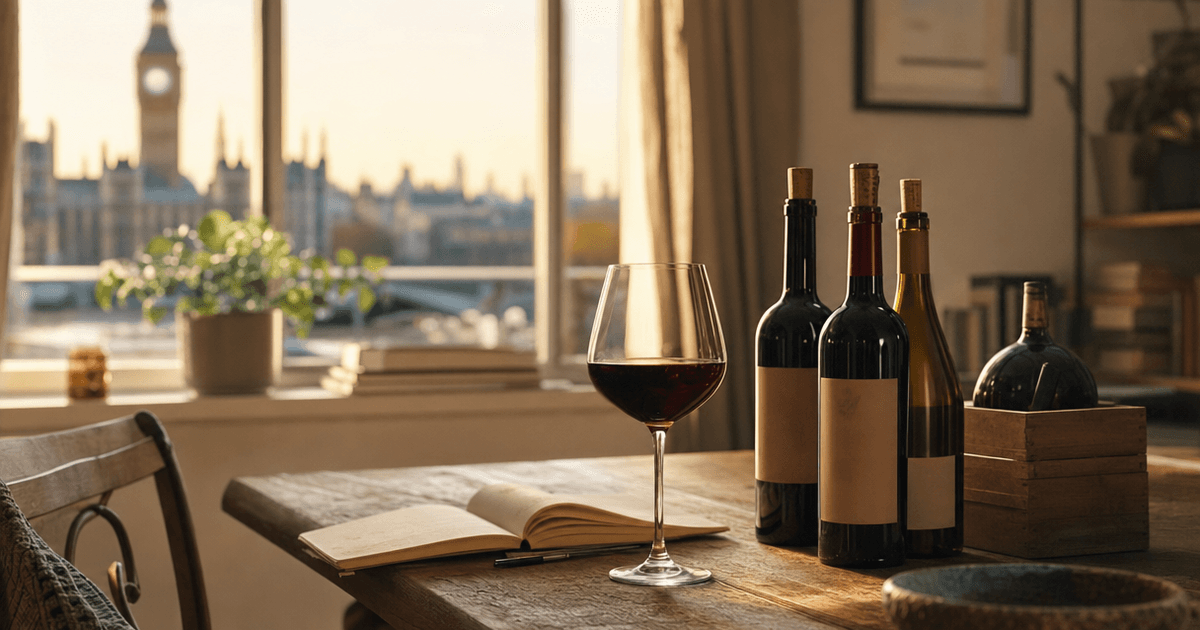
The truest test of a mixed case of wine isn’t how it looks on arrival — it’s whether bottle twelve ever gets opened. Around the shop we actually call it the bottle-twelve test, and it’s the measure every case in this piece gets held to. Most cases that fail were built for the week the buyer wished they had, not the week they actually live. A mixed case of wine is exactly what it says on the tin: a set of bottles bought together in different styles, rather than twelve of the same red — variety, not bulk, and the honest answer to “I don’t know what I fancy tonight, but I’ll know it when I taste it.” By the end of this you’ll know how many bottles you actually need, how to shape a case so nothing sits unopened at the back of the rack, and roughly what it should cost if it’s doing its job.
Is a case of wine 6 or 12?
Both, genuinely. The trade uses six-bottle and twelve-bottle cases as its two standard units, unlike beer or milk, which usually come in crates. Twelve used to be the default; six-bottle cases have grown more common as prices climbed (the German wine trade, by long habit, has favoured them for decades). For a mixed wine case bought for your own kitchen, either size works — it’s a question of how much variety you want landing on your doorstep at once.
There’s a sustainability angle worth knowing too. A twelve-bottle case uses less cardboard and packaging per bottle than two six-bottle cases, so it’s the greener choice if you’re not fussed about splitting styles across two boxes. Most everyday cases arrive in cardboard outers with vertical or moulded dividers; merchants who take mail order seriously use sturdier board specifically to stop bottles rattling into each other in transit. Fine wines built for long ageing sometimes still turn up in rough pine cases stamped with the estate’s name — lovely to receive, but not what you’re after for a Tuesday night red. Size settled, the more interesting question is what actually goes in the box.
Shaping a case that actually gets drunk
That bottle-twelve problem usually starts with buying aspirationally — twelve bottles the buyer thought they should like rather than twelve they’d reach for. The trade has a name for the split of customer behind it: some people want the broadest possible range and love trying something new each time, others know exactly what they enjoy and would rather stick close to it. Neither is wrong — but it changes what you should put in the box.
Here’s the case I build most weeks for regulars — a mixed twelve for home drinking, no occasion required:
- Two “house” bottles — one red, one white, reliable enough that you’d order them again without thinking. Restaurants keep a house pour for exactly this reason; there’s no reason your kitchen shouldn’t have one too.
- Three or four food-friendly reds — a claret-style Bordeaux blend works with cheddar, roast lamb, game or a Sunday joint; something Rhône-shaped for anything off the barbecue; a lighter Pinot Noir for the nights the oven stays off.
- Two or three whites spanning weight, from something lean and zippy — a brisk Sauvignon Blanc does that job well — to a rounder, food-hungry style; a dry Riesling covers more of the week’s cooking than people expect.
- One rosé, for the grey Wednesday that needs cheering up.
- One fizz, because someone always finds a reason to celebrate.
- One “stretch” bottle — a grape or region you haven’t tried. Keeps the case interesting rather than just efficient.
Every slot in that list has a night attached to it — that’s the bottle-twelve test applied in advance. If you want the fuller thinking behind stocking wine for daily life rather than just the odd case, our guide on bringing the vineyard home goes into more depth.

What is a half case of wine?
A half case is six bottles — literally half the standard twelve — though because six also happens to be one of the trade’s two standard sizes, merchants often just call it “a case of six” rather than bothering with the word half. It suits smaller households, first orders with a new merchant, or trying a new style before committing to a dozen of it.
It’s also the sensible way to test a shop out. If you’re not sure a merchant’s picks suit your taste, six bottles is a fair trial before you commit to twelve — and it’s a fair trial of you, too: if all six went in a month, you’ve earned the full case. For flat-dwellers or anyone drinking alone most nights, we’ve written more on keeping a sensible amount of wine on hand without it becoming clutter in the five-bottle cellar.
Matching the bottles to the week ahead
This is where a mixed case earns its keep — it should cover Monday’s pasta and Saturday’s roast without you having to think about it. A claret-style Bordeaux blend (broadly Cabernet Sauvignon and Merlot, the proportions shifting a little from vintage to vintage) sits happily alongside cheddar, roast poultry, pork, or a proper Sunday lamb. If you’re cooking with sage, which turns up more than people expect, the pairing guides lean it nicely towards Merlot, Pinot Noir, Riesling, Sauvignon Blanc or Shiraz — worth remembering next time you’re browning butter for a squash risotto.
Good everyday Bordeaux, red and white, has quietly become one of the best-value categories on a merchant’s shelf — plenty of character for the price, if you look past the more famous, pricier names from the same region. If you like the idea of drinking Bordeaux without paying for the label on the front, our piece on second wines explains how to do exactly that — and a second wine makes a very smart claret slot in the case above.
What it costs in shape
Under about £5 a bottle, it’s genuinely difficult to make something with real character once duty, packaging and margin are accounted for — that’s just the arithmetic of the trade, not a comment on any particular producer. Between roughly £6 and £10, though, there’s a proper depth of good, honest, characterful wine being made, both from familiar regions doing what they do well and from producers chasing something a bit more interesting at that price. If you keep one pricing rule, keep this one: £6 to £10 is where the honest everyday case lives, and that band is where most of a sensible mixed case for home drinking should sit.
Don’t assume expensive means better suited to a Tuesday, either. The best mixed cases I’ve built for regulars lean towards consistency and drinkability over impressiveness — wine you’d happily pour without a toast, which is exactly the kind that passes the bottle-twelve test.
Choosing who you buy the case from
Once you’ve settled the shape, the merchant matters more than people think. A few things worth checking before you commit to a full mixed case order, whether from us or anyone else:
- Reliability and delivery speed — a case that turns up broken or three weeks late isn’t a bargain, whatever the discount.
- Real discounts on real vintages — case savings should reflect genuine value, not a way of moving stock nobody wanted at full price.
- A trial before a bulk order — start with an established merchant, or test a new one with a smaller order before trusting them with a full case.
- What’s actually in the box — quality bottles chosen with some care, not leftovers padded out to make up the number.
Find a merchant who passes those four checks and the rest of this article gets easier every time you order.
Questions customers ask us
What is a case of wine called? Just “a case” — plain and simple. Unlike beer or milk, which come in crates, wine has been sold in cases of six or twelve for as long as the trade’s kept records, and no other name has ever really stuck.
Which wine is best for diabetics? That’s a medical question, and it deserves a proper answer from your GP or diabetes team, not a wine merchant guessing from behind the counter. We’re glad to help you find wine you’ll enjoy — the health side belongs with the professionals who actually know your case.
The merchant’s last word
I’ve built hundreds of these cases over the years, and the ones that get finished — properly finished, down to the last bottle — are never the flashiest. They’re the ones matched honestly to the week someone actually has, not the week they wish they had. Tell me what you eat on a normal Tuesday and I’ll build round that — house red, brisk white, one stretch bottle and all. Or browse the Red cellar and see what’s already made up.



