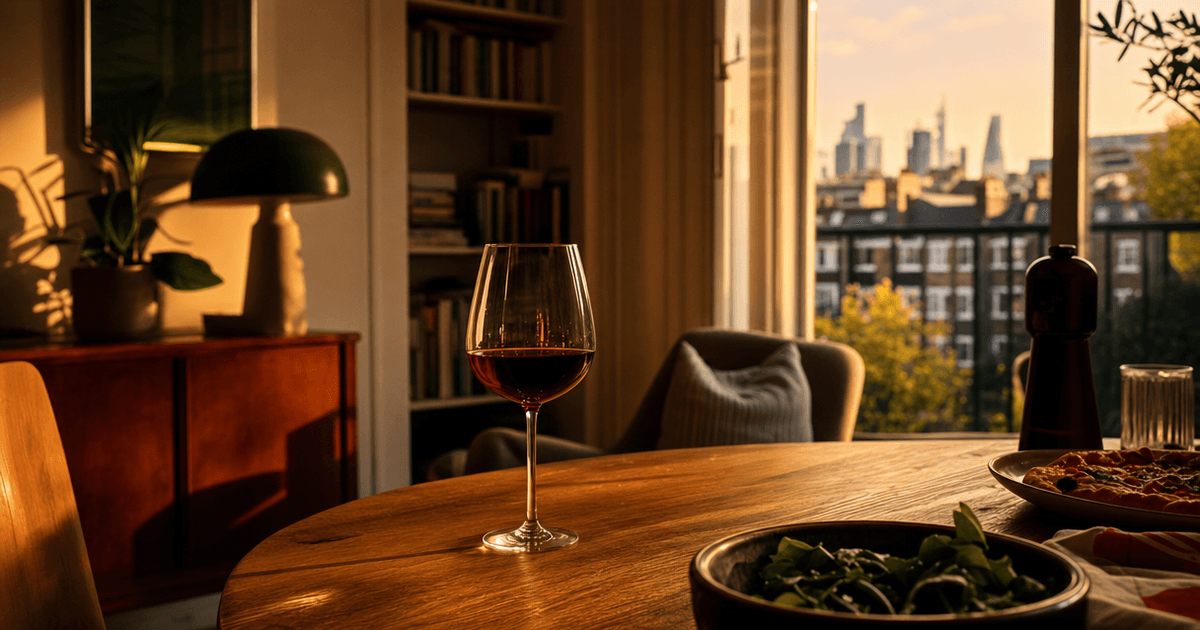
Wine with pizza sounds like the easiest pairing in the book, until you’re stood over a Margherita with something big and tannic and wondering why the whole plate’s gone a bit flat. It needn’t be complicated. By the end of this you’ll know which style to reach for by topping, when white beats red, and when the honest answer is just “whatever’s open, love.”
A good pizza wine, at its simplest, has plenty of acidity and not much tannin — the tomato sauce demands the acid, the melted cheese punishes anything too gripping. (There are exceptions, because this is wine, not maths.)
What wine goes well with pizza?
The best wine to drink with pizza has bright acidity, moderate alcohol, and not much grip from tannin — tomato sauce fights flat wines, and cheese fights hard ones. Lighter Italian reds like Barbera, Dolcetto and young Sangiovese do the job reliably. So does Pinot Grigio, Prosecco, or a simple Sauvignon Blanc, if you’d rather go white. Beer’s fine too — nobody’s marking you down for it.
For a straightforward tomato-and-cheese pizza, trade opinion also points to some less obvious choices: Blaufränkisch from Austria, Champagne, even an aged Cabernet Sauvignon, all of which have the structure to sit alongside melted mozzarella without sulking. What doesn’t work, according to recent tasting panels, is anything overly tannic — it overwhelms the cheese and leaves the wine tasting bitter rather than bold. Some whites can go the other way and taste thin or sharp against the sauce, which is why acid and a bit of fruit weight both matter more than colour.
If this is the start of you drinking a bit more intentionally at home generally, not just on pizza night, our guide to drinking well in the city is the place to start — it covers the basics this article assumes.
Matching the bottle to the topping
Here’s the shape of it, topping by topping. Treat it as a starting point, not gospel — a good bottle open on the table beats a perfect one left in the rack.
| Topping | Reach for | Why it works |
|---|---|---|
| Margherita / plain tomato & mozzarella | Barbera, Dolcetto, Pinot Grigio, Prosecco | Acid matches acid; Prosecco especially shines on white pizza |
| Pepperoni | Barbera, Chianti, Montepulciano d’Abruzzo | Soft tannin, bright cherry fruit cuts the fat and spice |
| Calzone | Lambrusco, Syrah/Shiraz | The sealed dough needs a wine with a bit more grip and fizz respectively |
| Puttanesca-style (olives, capers, anchovy) | Sangiovese, Pinot Noir, Zinfandel | Savoury toppings want savoury, food-friendly reds |
| Peppers & onions | Cabernet Franc, Sauvignon Blanc | Herbal, green notes echo the vegetables |
| White pizza (ricotta, no tomato) | Chianti Classico or Riserva, Soave, Chablis | Richer cheese wants either structure or steely white acidity |
If Sangiovese keeps turning up on your table — and it will, given how often it appears here — it’s worth knowing there’s real range within it, from the Tuesday-night stuff to bottles built to age. Our piece on Sangiovese styles, from Tuesday pasta to cellar treasure walks through that. And if you spot “Riserva” on a Chianti label and wonder whether it’s worth the extra few pounds, we’ve unpicked what Riserva actually means on an Italian label properly, because it’s a genuine step up in most cases, not just marketing.
One regional curiosity worth knowing: Cirò Rosso, a medium-bodied red from Calabria, is one of the few Italian wines actually associated with pizza by name in older pairing guides — alongside spicy dishes, braised lamb and mushroom pasta. Worth hunting down if you want something a little different from the usual Chianti reach.

Do you eat pizza with red or white wine?
Both work, and it’s really down to the toppings rather than a fixed rule. Red suits tomato-heavy and meat-topped pizza — the classic instinct is right more often than not. But a bracingly dry white, or a glass of something sparkling, does just as well against a cheese-forward or white pizza, especially on a warm evening when a big red feels like too much coat.
Mozzarella on its own is more flexible than people assume. Fiano, Greco di Tufo, Soave, Orvieto and a good Chablis all sit nicely alongside fresh cow’s milk cheese, as do lighter reds like Pinot Noir and young Sangiovese. Champagne turns up again here too — not a stunt pairing, a genuinely sound one, particularly with a simpler pie.
Rosé is worth not overlooking. It sits neatly between the two camps, and off-dry German Riesling drinkers will already know the logic — that same softness that suits rosé with spicier food does similar work alongside a chilli-heavy or ‘nduja topping. Sangiovese, meanwhile, keeps proving itself the safest bet for anything built around a proper tomato sauce.
Do Italians drink wine with pizza?
Less than most visitors assume, actually. Beer has traditionally outsold wine in Italian pizzerias by a fair distance — cheaper, heavily marketed, and simply the drink people reach for with a casual, workaday meal. Pizza itself started life as food for Neapolitan peasants and workers, oven-baked from the 16th century onward, long before anyone was matching it to a glass of anything in particular.
The wine habit is older than the beer habit, though, and it’s coming back. Gourmet pizza and better wine lists in pizzerias are reviving a pairing tradition that predates the rise of industrial lager sales. One piece of advice on the subject has stuck with me: pick something that “isn’t trying too hard” — a light red like Gamay, or a rosé made from an interesting grape, rather than your most serious bottle. Pizza is a relaxed meal. The wine should behave like a guest, not the host.
Worth knowing too: Naples’ tradition of pizza-twirling — the pizzaiuolo’s craft — has UNESCO recognition as intangible cultural heritage, and Margherita pizza itself was named after Queen Margherita di Savoia following Italian unification in 1861. None of which changes what’s in your glass tonight, but it’s a nice thing to know while you’re eating one.
When it’s a Friday-night delivery, not a proper Neapolitan base
Most pizza most people eat isn’t wood-fired Napoletana — it’s a delivery box or something from the freezer, and the dough is usually sweeter than the traditional stuff. That changes the maths a bit. Soft, fruit-forward reds work better here: Barbera, Argentinian Malbec, Merlot, and Sangiovese, especially with pepperoni. Steer away from Cabernet Sauvignon, Syrah and Zinfandel on a sweeter base — they tend to clash rather than complement, turning bitter against that brioche-like crust.
Cheaper frozen pizzas tend to run salty as well as sweet, and tasting panels have found that wines with tart fruit and a bit of minerality generally handle that combination best — though the occasional full-bodied red has surprised people too. This is also a good excuse to reach for something well-made but modestly priced rather than your best bottle. If you like the idea of drinking properly good wine without the full price tag attached, our piece on second wines and how to drink a great château without the grand vin price is worth a read for occasions just like this.
Questions customers ask us
Which wine is best for diabetics? That’s a medical question, and honestly not one I’m qualified to answer — a GP or pharmacist is the right person for that conversation, not a wine merchant. Once you know what suits you, I’m happy to help find styles you’ll enjoy within it.
Does rosé work with pizza? Yes, particularly with spicier toppings or on a warm evening — it bridges the gap between a soft red and a crisp white nicely, and nobody at the table will complain.
The merchant’s last word
I’ve sold a lot of “serious” wine to people who really just wanted something honest to drink with a pizza on a Tuesday. Both are good instincts, and neither needs apologising for. Pick something with a bit of acid, don’t overthink the colour, and let the topping do the deciding. If you fancy something with a bit more occasion about it for a Friday night in, go and browse the Red cellar — I’ll be here when you’ve picked.



