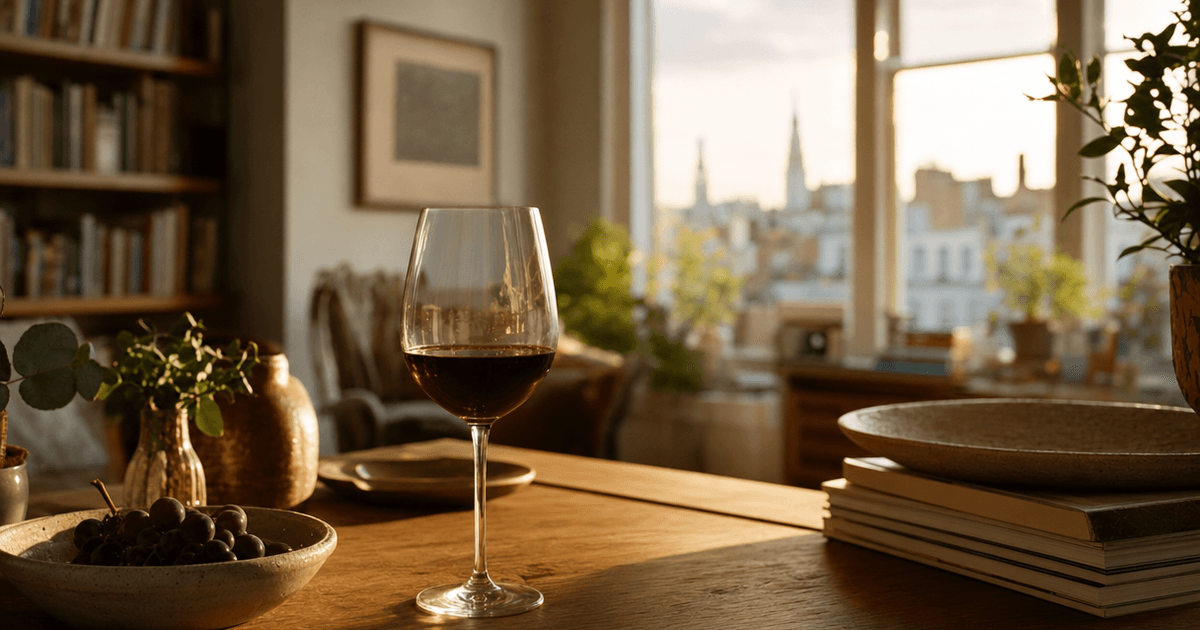
Fronsac wine is one of those bottles a customer picks up, turns it over, and asks me: “is this any good, or is it good because it’s cheap?” Fair question. Fronsac is a small right-bank Bordeaux appellation just west of Libourne, on wooded limestone hills above the Dordogne — red wine only, built mainly from Merlot with Cabernet Franc alongside. By the end of this you’ll know what sets it apart from its neighbours in Castillon and Francs, what it actually tastes like, and whether it earns a place in your basket instead of the St-Émilion sitting next to it on the shelf.
What does Fronsac mean?
Fronsac isn’t a grape or a style — it’s a place. The name belongs to the small town on the hill above the Dordogne that gives the appellation its identity. There was a Roman temple here once, then a fortress, and Charlemagne is locally said to have had a particular soft spot for the wine made below it.
The real fame came later. In the mid-1600s the Duc de Richelieu — also, handily, Duc de Fronsac — pulled down the old fortress and built a villa where he entertained often and well. Historical accounts credit that period, and the wine served at those dinners, with putting Fronsac on the map; some trace the first great right-bank wines to around 1730, made on these same slopes.
Just south sits Canon-Fronsac, smaller still and historically the more prized of the two names. Today, though, a canon-fronsac wine and a Fronsac wine sitting side by side will taste more alike than different — trade tasting opinion in recent years puts the two appellations as sharing essentially the same fundamentals. If the whole right-bank-versus-left-bank business is still new territory for you, my Bordeaux without the intimidation: a merchant’s map walks through the wider geography before you go any further down this road.
What kind of wine is Fronsac?
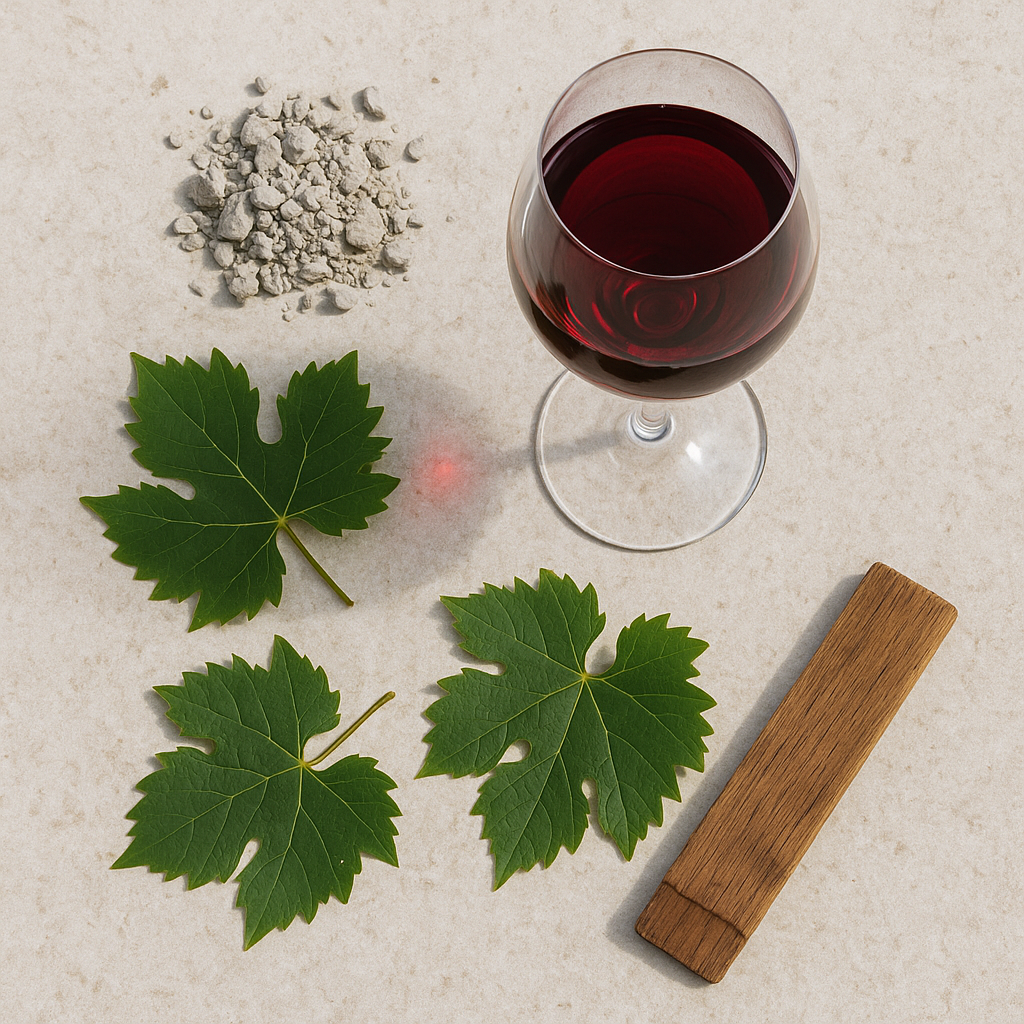
Fronsac is red, full stop — no white, no rosé wears the name. It’s Merlot-led, blended with Cabernet Franc, grown on clay and limestone rather than the gravel that dominates the left bank. That soil is exactly why Merlot and Cabernet Franc rule here rather than Cabernet Sauvignon, a pattern true across the whole right bank, not just Fronsac.
Expect real structure. This isn’t a soft, forward glass for a weeknight — tannin grips hold in youth, and one respected trade voice has gone as far as saying these wines can be genuinely unattractive to drink early in most vintages. Give it time and you get blackberry, a little clove, sometimes bitter chocolate or liquorice once the tannins settle. A little Malbec has been creeping quietly into right-bank blends generally over recent vintages, Fronsac included, though Merlot and Cabernet Franc still do the heavy lifting.
If you’re still working out why Merlot runs the show on this side of the river and Cabernet Sauvignon rules the other, that’s precisely what my Cabernet or Merlot: which grape suits your table tonight? piece untangles.
Fronsac’s neighbours: Canon-Fronsac, Castillon and Francs
Three names get mentioned in the same breath as Fronsac, and it’s worth knowing what separates them before you buy on instinct.
| Appellation | Where | Approx. size | Grape profile | Character |
|---|---|---|---|---|
| Canon-Fronsac | Immediate south of Fronsac | ~220 ha | Merlot-led | The historically grander name; today near-identical in style to Fronsac |
| Castillon Côtes de Bordeaux | East of St-Émilion, above the Dordogne | ~1,958 ha | Merlot-based | Sturdy, generally better structure than basic Bordeaux AOC |
| Francs Côtes de Bordeaux | Between St-Émilion and Bergerac | ~395 ha | Merlot-led reds, small Sémillon whites | Sturdy, clay-limestone reds; revived since the 1980s |
Castillon takes its name from Castillon-la-Bataille, the town where the Hundred Years War came to its end, and functions almost as an eastern stretch of St-Émilion itself — land here is still relatively affordable, which shows in the glass as good structure for modest money. Francs sits higher and further out, towards Bergerac, and alongside its sturdy reds makes tiny amounts of Sémillon-based white, both dry and sweet, kept alive in memory of a style that used to be much more common on this ground.
This is exactly the territory I mean when I talk about Value Bordeaux: drinking well without the grand cru price — these Côtes appellations are where a good deal of that value actually sits.
Is Fronsac a good wine?
Yes, and increasingly so. Trade opinion has shifted over the last decade or two from “overlooked corner of the Gironde” to “worth watching closely,” pointing to riper, fleshier wines replacing the harsh, too-early-picked bottles that gave the region a rough reputation in the past. A new generation of growers, backed by outside investment — some of it, notably, from Asia — has corrected a lot of old faults.
Organic and biodynamic farming has taken hold faster here than in many Bordeaux appellations, with recent estimates putting close to a fifth of the vineyard under one or the other. And the fronsac wine price still sits well below an equivalent St-Émilion, even as quality has closed the gap — one respected taster has flagged wines scoring in the low-to-mid 90s from these hills at a fraction of what a classified St-Émilion would ask.
There’s an older, blunter way of putting it, from a Bordeaux writer who’s tasted the region for decades: these are wines for people who actually want to drink good wine, not for speculators chasing a label. No investment premium sits on the price. You’re paying for what’s in the glass, not the name on it — which, in my experience, is exactly when a region is worth your attention.
Buying and drinking it well
Don’t rush it. Most Fronsac wants five to ten years in bottle before the tannins really soften, and the better vintages will hold well beyond that — treat a young bottle as one to put away, not open tonight. Decant anything under about five years old if you’re impatient; it helps, though it won’t do all the work for you.
Food-wise, this wants weight on the plate — a Sunday rib of beef, a long-cooked duck, something with fat and time behind it, not a quick Tuesday pasta. A good wine shop for Fronsac will usually carry a couple of vintages side by side for exactly this reason, so you can compare a young, gripping bottle against one with a few more years of softening behind it.
On price, trade shelves tend to put decent examples anywhere from the high teens up to around £30, depending on vintage and how much oak and reputation sit behind the label. If the tannin talk still puts you off taking the plunge at that level, a second wine from a larger right-bank estate can be a gentler, cheaper way in — I cover that shortcut in Second wines: how to drink a great château without the grand vin price.
Questions customers ask us
What is the best wine in the Fronsac? There’s no single “best” — styles range from a polished, earlier-drinking approach (some estates now bring in outside consultants specifically to soften the wine sooner) to the older, tannic, built-to-wait style. Ask which camp a bottle sits in before you buy.
Is Canon-Fronsac better than Fronsac? Canon-Fronsac carried the grander historical name, being the smaller, more concentrated heart of the same limestone hills. Recent tasting opinion suggests the two are now close enough in style and quality that the distinction matters less than it once did.
How long should I keep a Fronsac before drinking it? At least five years for most, and the strongest vintages can go well past a decade. Buying young means buying patience along with the bottle.
Is Fronsac the same as St-Émilion? No — separate appellation, though right next door and built from similar Merlot and Cabernet Franc on similar clay-limestone ground. Fronsac usually costs noticeably less for wine of comparable seriousness.
The merchant’s last word
Fronsac was never the wine I reached for first — I’ll own that. For years I steered people straight past it toward St-Émilion because the name did the selling for me, and that was lazy on my part. Give a good bottle five years and a proper dinner, and it’ll show you exactly why Richelieu built a villa on this hill. Have a look and see what suits your table — browse the bordeaux cellar.