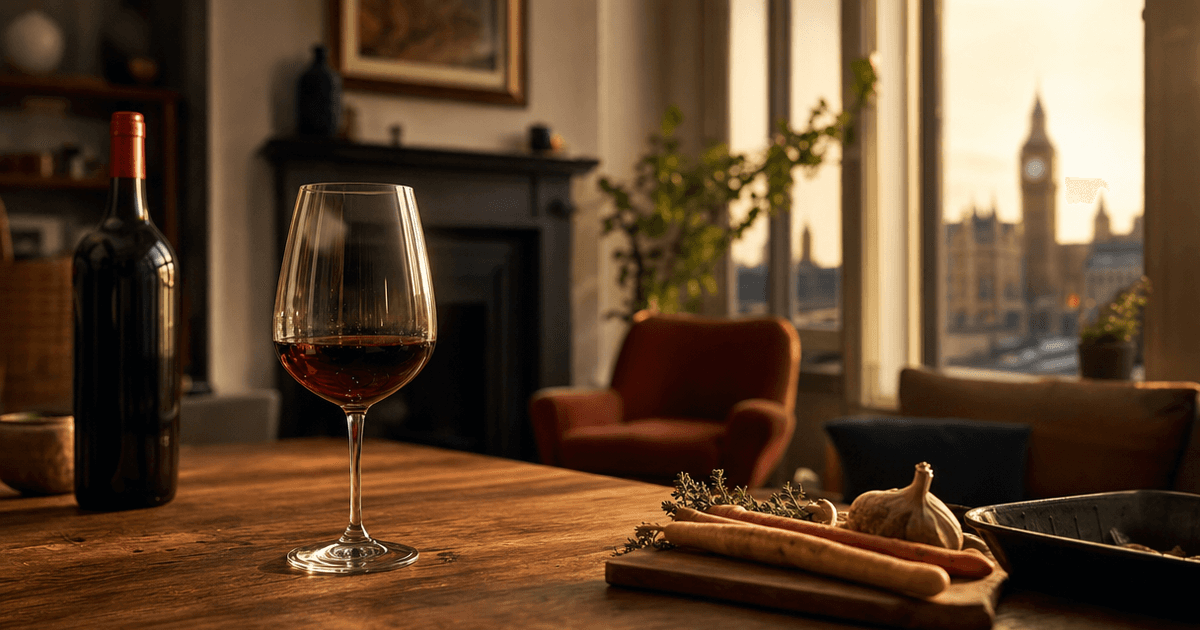
Red wine with roast beef is about as safe a pairing as exists in this trade, and Bordeaux — claret, if you were raised calling it that — is the wine most people reach for without quite knowing why it works. Claret is a blend built mainly from Cabernet Sauvignon and Merlot, with the balance shifting depending on which bank of the Gironde it comes from (more on that shortly). By the end of this you’ll know which side of Bordeaux to pour depending on your cut, your gravy and how pink you like the middle — and when to leave the good bottle in the rack for another day.
What drink goes well with roast beef?
A red with decent tannin and enough weight to stand next to the meat is the classic answer — the tannin cuts through the fat and the savoury crust, and the fruit meets the richness halfway. Bordeaux is the benchmark, but Rhône reds, Cabernet Sauvignon from further afield, a good Malbec or a sturdy Rioja will all do the job honestly. Which one wins depends more on how you’ve cooked the joint than on the cut you bought.
A rib roast, for instance, is a broad church — Bordeaux, red Burgundy, Cabernet, Malbec, Merlot and Pinot Noir have all been served alongside it happily, and I’ve poured most of them over the years. Roast beef with a mustard crust is a different animal; the mustard fights big tannin, so a red Burgundy or a Côtes du Rhône tends to sit more comfortably than a chunky claret does. And shoulder, cooked slow until it falls apart, wants either Bordeaux or something like Shiraz with a bit more brawn.
For a proper look at how pairing logic works beyond beef, our food and wine pairing guide goes into the mechanics — tannin, fat, acid — in more depth than I’ve room for here.
Do you have red wine with beef?
Yes, and the shape of that range matters more than the label. We stock everything from young, fruit-driven claret for a Tuesday joint to serious Left Bank Bordeaux for the Sunday you’ve been looking forward to. The right one for you depends on the cut and how rare you’re taking it.
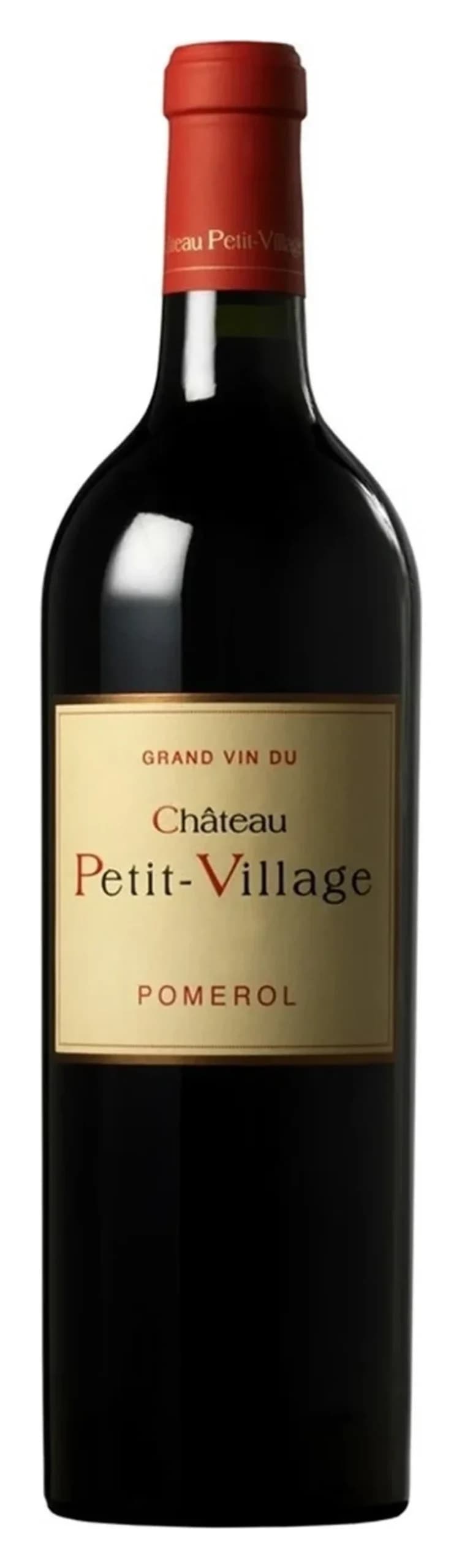
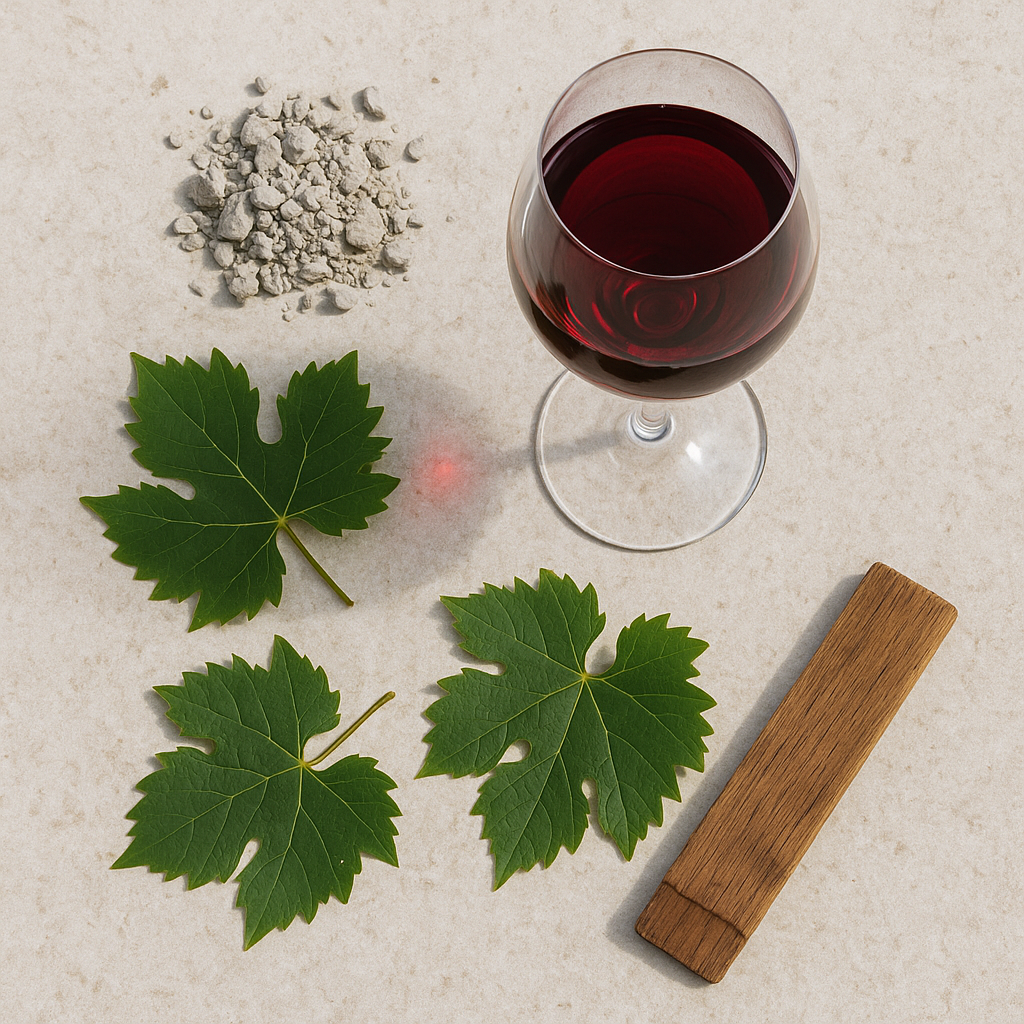
Bordeaux splits, broadly, into two banks either side of the Gironde estuary, and it’s worth knowing the difference before you buy on autopilot. The Left Bank — Médoc, Pauillac, St-Julien, St-Estèphe, Margaux — grows on gravel and leans on Cabernet Sauvignon, giving firmer tannin and more structure. The Right Bank — Pomerol, St-Émilion, and their satellite villages like Lussac or Montagne — sits on clay and leans Merlot, giving something rounder and softer earlier in its life. I got this backwards for a good few years in my first shop, pushing Pauillac at customers cooking a rare fillet, when a Pomerol would have sat far more comfortably with it.
Here’s roughly how I’d match cut to bank:
| Cut or style | Bordeaux to reach for |
|---|---|
| Rare fillet or sirloin | Right Bank — Pomerol or St-Émilion, Merlot-led, softer tannin |
| Well-done topside or rib roast | Left Bank — Médoc or Pauillac, firmer structure |
| Cold roast beef in a sandwich | Beaujolais, or a young, light claret |
| Slow-braised beef or ox cheek | Something gutsier — a mature Médoc, or a Right Bank with a few years on it |
If you want the wider map of the region before you commit to a bottle, the Bordeaux without the intimidation guide will save you some guesswork on appellations.
Which claret — young or old?
This is the bit people skip, and it changes the whole match. Young Bordeaux carries firm, sometimes astringent tannin; give it a few years and that tannin softens into something more savoury, closer to tobacco and cedar than raw grip. Trade opinion generally holds that the older the wine, the simpler the cooking should be — a plainly roasted joint with good mature claret, rather than a wine fighting a busy plate of trimmings.
Got a young bottle with tannin that grips your teeth? No need to cellar it for a decade — a splash into a decanter an hour or two before pouring does wonders, softening that grip into something far more approachable. It’s essentially the mirror image of what you’d do with an older wine, just for different reasons; our guide to how to serve an aged Barolo walks through the decanting logic in more depth, and most of it transfers across even though you’re dealing with youthful tannin rather than tired sediment.
Does Merlot go with roast beef?
Yes, straightforwardly — Merlot is a recognised match for both roast beef and rib roast, and it’s one I reach for more often than people expect from a claret merchant. It’s softer and plummier than a Cabernet-heavy Left Bank wine, with less of that firm grip, which makes it a kinder match for leaner beef or a joint that’s come out closer to medium than rare.
Where Merlot really earns its place is with a rich, reduced gravy. If you’re making roast beef with red wine gravy — deglazing the tin with a splash of whatever’s open — a Merlot-dominant Right Bank wine tends to echo that sauce rather than compete with it. Cabernet Franc, Merlot’s blending partner on the Right Bank and in the Loire, does something similar and pairs particularly well with leaner roasted beef if you fancy a change of grape.
Serving it properly
Temperature matters more than people think, and it’s the easiest thing to get wrong in a warm kitchen on a Sunday. Red Bordeaux wants to be served closer to cellar temperature than room temperature — too warm and the alcohol shouts over the fruit. Our wine serving temperatures cheat-sheet has the specifics if you want to get it right without a thermometer in your hand.
Decant a young, structured claret for an hour or so before the joint comes out of the oven — it needs the air more than the beef needs the wine to be poured early. If you’re doing a slow cooker roast beef with red wine, a robust young Bordeaux or a sturdy Right Bank wine holds up well through hours of gentle heat; save the bottle with some bottle age on it for drinking alongside the finished plate, not simmering in the pot.
Questions customers ask us
What to serve with beef in red wine? If the beef itself has been braised or stewed in wine, match the dish’s weight rather than the raw cut — a mature Right Bank Bordeaux or a Rhône red such as Crozes-Hermitage both handle a rich, wine-based sauce well. Keep your finer bottle for the glass, not the casserole.
Does the gravy change the wine choice? It can — a lighter, jus-style gravy suits the same wine you’re drinking, while a heavier, wine-reduced gravy calls for something with a touch more fruit to match its intensity. Merlot-led Bordeaux tends to flex well either way.
Do I need an expensive bottle for a family roast? Not at all — a straightforward Left or Right Bank Bordeaux from a good, unfussy vintage will do the job without ceremony. Save the serious bottle for the Sunday that deserves it.
The merchant’s last word
I’ve poured claret with roast beef more Sundays than I can count, and I still think it’s the easiest right answer in the shop — provided you match the bank to the cut, not just the label to the roast. Get the tannin and the cooking style talking to each other, and the rest looks after itself. Come and browse the bordeaux cellar and I’ll point you towards the right bottle for your particular joint.