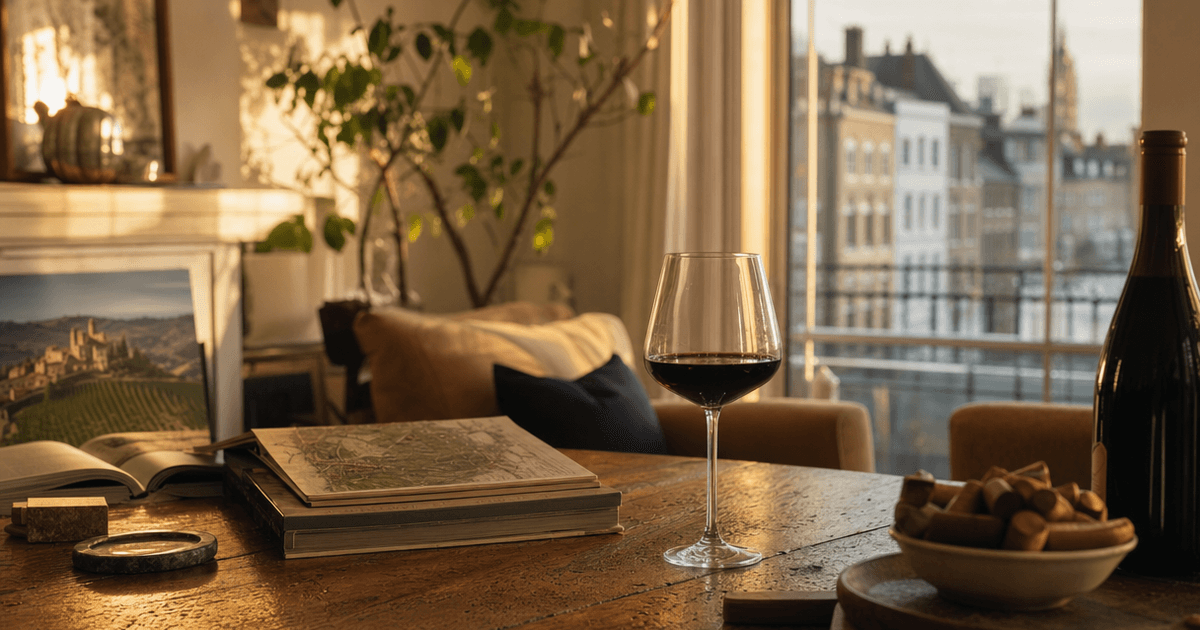
Best vintages for Barolo isn’t a single list you can memorise — it shifts depending which village grew the grapes, because a hot year can turn Serralunga into iron and La Morra into silk in the same twelve months. This is the piece where the map and the calendar meet: Barolo is 100% Nebbiolo, grown across eleven villages in Piedmont’s Langhe hills, running roughly from muscular Serralunga d’Alba in the east to perfumed La Morra in the west (a spread of soil, altitude and exposure that matters as much as the year on the label). By the end of this you’ll be able to read any vintage against any village and pick a bottle that’s actually ready to drink, not just old — whether you’re buying for Saturday or for a decade hence.
Is 2019 or 2020 better for Barolo?
Trade coverage of the related Langhe Nebbiolo releases points to 2019 as the steadier of the two — a balanced growing season with a long run to a classic, slightly late October harvest and no real extremes. 2020 hasn’t built the same weight of independent tasting notes yet, so I’d treat early claims about it with a bit of caution rather than certainty.
That Langhe Nebbiolo comparison matters because those wines are usually the same vines, just declassified or from younger plots, released a year or two ahead of the Barolo itself — a preview, not the main feature. A balanced season with no extremes tends to favour freshness and perfume over raw power, which suits La Morra’s natural style more readily than Serralunga’s. If someone tells you with total confidence which of the two is better for Barolo specifically, before the wines have had proper bottle time, I’d ask what that confidence is built on — patience is the honest answer, not a verdict. If you’re buying either year now, buy it to lay down, and let a bottle of something older do tonight’s work.
Serralunga or La Morra: what the village tells you before the vintage does
Pick your village and you’ve already answered half of any “barolo best vintages” question, because Serralunga and La Morra pull Nebbiolo in opposite directions before the weather even gets a vote. Serralunga d’Alba sits on pale calcareous marl and has long been prized for tannic backbone — old blended Barolo houses used to buy Serralunga fruit specifically for that structure. Sites like Falletto, up at altitude, manage to combine that power with real finesse, and recent trade tasting has found Serralunga wines from 2009 and 2010 far more approachable young than the village’s fierce reputation suggests.
La Morra, by contrast, carries a trademark elegance and perfume — rose, violet, red fruit — and has traditionally been the softer, friendlier wine of the two in youth. Cru sites like Brunate and Cerequio, which sit right on the boundary with Barolo village itself, show a more structured side than most of the commune, so don’t assume every bottle from there is a light touch.
In between geographically and stylistically, Castiglione Falletto tends to land in the middle — producers there have shown power and grace aren’t mutually exclusive. Monforte d’Alba, home to the Bussia cru, is where you’ll often find wines built with real backbone for lengthy ageing. If choosing wine by neighbourhood appeals to you, it’s the same logic as Margaux, Pauillac, Saint-Émilion: choosing Bordeaux by commune — place shapes the wine as much as the harvest does. And once you’ve picked your side of that map, the vintage question below becomes a much smaller one.

What is the best age for Barolo?
There’s no single best age — it depends whether you’ve got an austere, tannic vintage or a forward, fruit-driven one. A hot, opulent year like 2009 can be genuinely enjoyable within five or six years of harvest; a tighter year like 2006 wants a decade or more before the tannins soften into something worth the wait.
As a rough shape: most straight-village Barolos from good vintages hit their stride somewhere between eight and fifteen years after harvest, and the top single-vineyard wines and Riservas — often aged three to six years in cask before release in the first place — can keep developing for twenty-plus. One trade note reckoned a Brunate from 2008 needed until after 2018 to show properly; another, on a 1998 opened in 2014, sixteen years on, found a still-fresh palate and real perfume. That’s the pattern worth trusting more than any fixed number: open one bottle from a case early, then leave the rest be if it clearly needs time. For more on how much a single year should sway your buying, our piece on vintage variation: does the year on the bottle matter? goes into the reasoning properly. And if you’d rather not gamble at all, ask for a vintage already inside its window — that’s precisely the sort of thing a merchant is for.
Is 2000 a good year for Barolo?
Solid rather than spectacular is the honest answer, and it’s a year where knowing the producer’s style matters as much as knowing the vintage. One Serralunga estate’s 2000 Riserva, tasted a decade after release, showed noticeably oaky character — not necessarily the vintage’s fault, more a reminder that ageing choices can mask a wine for years.
The wider context helps here: trade opinion on Piedmont since the late 1980s reckons on roughly seven or eight genuinely good-to-outstanding vintages a decade, against only two or three that disappoint — a far better strike rate than the cooler, wetter 1970s ever managed. 2000 sits in that generally favourable stretch without being one of the standout years the way 2001 or 2004 turned out to be. If you’re offered a 2000 Barolo now, a quarter-century on, it’s very much a drink-it-not-keep-it proposition — any tannin that was going to resolve has had its chance. Priced fairly, that can still be a lovely buy for a dinner this month; priced like a trophy, walk on.
Best Barolo vintages, decade by decade
This is the shape trade opinion gives when people ask about the best vintages for Barolo, useful as a starting point rather than gospel — village and producer style still move these windows by years in either direction.
| Vintage | Character | Approx. drinking window |
|---|---|---|
| 2001 | Classic, black cherry fruit, fine acidity | 2014–2030 |
| 2004 | Excellent fruit and structure, approachable early | 2014–2030 |
| 2005 | Fresh, sturdy, good acidity | 2014–2020 |
| 2006 | Austere, firm tannins; the best are superb | From 2015 |
| 2007 | Rich, succulent, relatively forward | 2014–2022 |
| 2008 | Tricky season saved by a fine September; perfumed | From 2017 |
| 2009 | Hot, rich, opulent, moderate acidity | From 2015 |
| 2010 | Excellent quality and real staying power | From 2017 |
| 2011 | Rich and fruity, following a strong Barbaresco year | From 2017 |
Now cross it against the village, because that’s where the chart becomes advice. In a hot, opulent year like 2009, Serralunga gains flesh it doesn’t always carry — a friendlier introduction to the village than its reputation suggests — while La Morra can tip towards softness. In a classic, structured year like 2010 the logic flips: Serralunga and Monforte build wines for the decade after next, and La Morra gives you the rare chance to drink a great vintage young without vandalising it. The rule of thumb I sell by: hot year, buy the structured village; classic year, buy the perfumed one — or be prepared to wait.
So, in practice: buying to drink this year, look at 2007 or 2009 and lean La Morra or Castiglione Falletto. Buying to put away for a landmark birthday, look at 2010 or the best of 2006 and lean Serralunga or Monforte’s Bussia. That one sentence settles most of the Barolo conversations I have at the counter.
Questions customers ask us
Which Barolo is the best? There isn’t one crowned winner — the honest job is matching village style (Serralunga’s power against La Morra’s perfume) and vintage character to what you actually want in the glass, not chasing a single “best” bottle.
Does Barolo need decanting? Older or more tannic vintages generally benefit from time in a jug or decanter to open up; younger, forward vintages like 2007 or 2009 need it far less.
What food suits a young, tannic Serralunga Barolo? Something with fat and richness to meet the tannin head-on — a proper ragù or a well-marbled roast — works better than anything delicate.
The merchant’s last word
I’ve poured a fair few disappointing “great vintage” Barolos over the years, and every time the real problem was village or producer style, not the year printed on the label. A Barolo vintage chart without a village name next to it is only half an answer — get both right and even a modest year can outperform a famous one. For the fuller picture, our guide to Italy’s great reds: Barolo, Brunello and Chianti, explained is worth a read — or come and browse the italy cellar and we’ll talk it through properly, map and calendar together.



