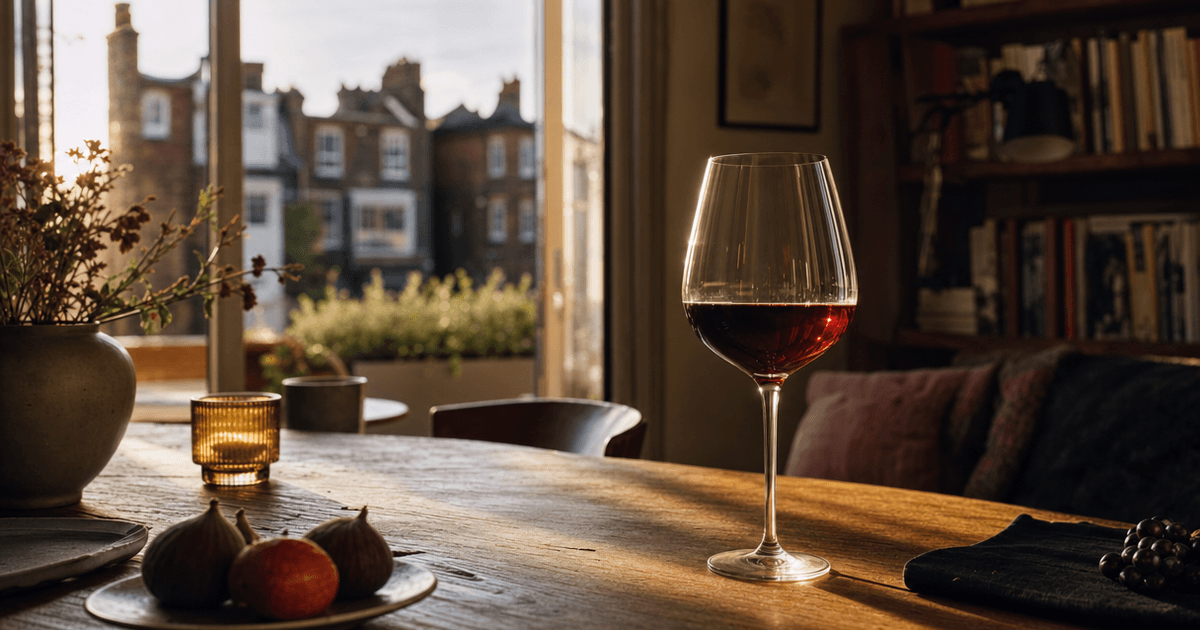
Nebbiolo is the grape behind two of Italy’s most serious reds, Barolo and Barbaresco, and it really does smell of tar and roses — that’s not a flourish I’ve invented for a shop sign, it’s the actual, recognisable scent that greets you the moment a good glass is poured. Nebbiolo is a black-skinned grape native to Piedmont in north-west Italy, producing wines that look pale in the glass but hit you with serious tannin and acidity. By the end of this you’ll know what’s in the bottle when you spot the word on a label, how it stacks up against Pinot Noir, and which tier — Nebbiolo, Barbaresco or Barolo — suits a Tuesday supper and which is worth saving for a birthday.
What kind of wine is a Nebbiolo?
A Nebbiolo wine is a red made from the grape of the same name, grown chiefly on the limestone hills of the Langhe around the town of Alba. Confusingly, it’s often pale ruby, almost see-through at the rim within a few years — nothing like the deep purple you’d expect from something this tannic. It isn’t a rosé; that translucency is just how the grape behaves, however ripe the fruit.
The name itself has been documented since the 13th century, which makes Nebbiolo one of Italy’s oldest recorded grapes, and by the nineteenth century writers across Piedmont were already treating it as the region’s proudest asset. Producers downgrade fruit from Barolo or Barbaresco-eligible vineyards to simple “Nebbiolo” status fairly often — usually because the vines are young, or the vintage wasn’t quite good enough to risk the big name. That’s not a lesser wine so much as a more honest, earlier-drinking one.
Under other names it turns up further afield: Chiavennasca in Valtellina up in Lombardy, Spanna around Novara and Vercelli, Picotener in Valle d’Aosta. Small plantings exist in California and Australia too, though trade opinion generally reckons they haven’t yet matched the pedigree of the Piedmont original — this grape seems to want its fog and its particular hills.
What does a Nebbiolo taste like?
Young Nebbiolo smells of red rose, violet and sour red cherry, often with a savoury, almost herbal edge underneath. With bottle age it shifts towards tar, dried leaves, leather and truffle — the “tar and roses” tag isn’t marketing, it’s two different life stages of the same wine. Expect high acid and firm tannin throughout; this is not a soft, easy glass.
Colour tells you almost as much as smell. Per WSET teaching, Nebbiolo starts pale ruby and moves to pale garnet within three to five years — faster than most reds this structured. A properly mature bottle can show a touch of orange at the rim, almost like the skin of an onion, while still tasting intensely alive in the mouth.
What surprises people most is the gap between look and feel. It’s pale, it’s pretty in the glass, and then the tannin arrives and dries out your cheeks a bit — one veteran taster described young Barolo turning the inside of your mouth into cowhide, and he wasn’t exaggerating for effect. Given ten, fifteen, twenty years, that same tannin softens into something silky, and the fruit turns savoury: mushroom, black cherry, a whisper of liquorice and fennel.

Is Nebbiolo similar to Pinot Noir?
Yes, in temperament — both are pale-coloured, highly perfumed grapes that show enormous personality differences from one hillside to the next, and both reward growers who leave well enough alone. Where they part company is structure: Nebbiolo brings far more tannin and acid to the glass, needs longer in bottle to soften, and rarely gets the fruit-forward, generous reputation Pinot Noir enjoys.
Winemakers and critics reach for the Pinot Noir comparison constantly, and it’s a fair shorthand rather than a lazy one. Both grapes are what the trade calls “site sensitive” — plant either one a few hundred metres away and the wine changes character, sometimes dramatically. If you love how a single Burgundy village can taste utterly different from its neighbour, Nebbiolo will make sense to you faster than most other grapes will.
Where they really diverge is the food they want. Pinot Noir is happy with a simple roast chicken or salmon; Nebbiolo wants fat and richness to stand up to that tannin — proper braises, aged cheese, something with a bit of muscle. If you already know your Burgundy from your Volnay, our guide to Pinot Noir around the world: Burgundy against the rest is a useful next stop before you commit further down the Nebbiolo route.
Is Nebbiolo the same as Barolo?
No. Nebbiolo is the grape; Barolo is one particular wine made from it, and by law it must be 100% Nebbiolo grown within a defined zone around the town of Barolo in the Langhe. A bottle simply labelled “Nebbiolo” is usually a lighter, earlier-drinking wine from the same area, or from vines and vintages the producer decided didn’t merit the Barolo name.
That’s the opposite approach to somewhere like Bordeaux, where blending several grapes together is the whole point — worth a look at our piece on What is a Bordeaux blend? The grapes behind the label if single-varietal versus blended is a new distinction for you. Barolo and Barbaresco stand or fall entirely on Nebbiolo alone.
Beyond those two big names, the grape wears several other hats:
| Style | Where | What to expect |
|---|---|---|
| Nebbiolo (basic) | Langhe, Piedmont | Lighter tannin, earlier drinking, good value |
| Barbaresco | Barbaresco commune, Langhe | Ages a touch faster than Barolo, still serious |
| Barolo | Barolo commune, Langhe | Full-bodied, high tannin, decades of ageing potential |
| Roero | Across the Tanaro river from the Langhe | Sandier soils, more perfume, less weight and size |
| Gattinara, Ghemme, Boca | Alto Piemonte, further north | Often blended with local grapes such as Vespolina |
| Valtellina (as Chiavennasca) | Lombardy | Alpine, leaner style, distinct local identity |
For the full family tree of Italian reds — where Nebbiolo sits next to Sangiovese and the Chianti crowd — our pillar guide, Italy’s great reds: Barolo, Brunello and Chianti, explained, goes further into that territory.
Getting the best from the bottle
Nebbiolo is a wine that rewards a bit of patience at the table, not just in the cellar. Use a big-bowled glass if you have one — this grape’s whole appeal is perfume, and a wide glass gives the rose and tar something to climb out into. Serve it at a proper cool room temperature rather than fridge-cold; chilling mutes exactly the aromatics you’re paying for.
Young, tannic bottles benefit from an hour in a decanter, or even just an open bottle and patience, to soften that initial grip. Older bottles need decanting too, but more gently — mostly to leave any sediment behind, not to wake the wine up.
On the food side, this is a grape that was more or less built around the Piedmontese table: beef, especially a plain roasted or unsalted cut, lamb, game, veal, pork, mushrooms and truffles, cheese fonduta, offal, and pasta with a proper meat sauce. Skip delicate white fish and light salads — the tannin will flatten them.
Questions customers ask us
Does Nebbiolo age well? Very well — a well-kept Barolo or Barbaresco from decades ago can still be a genuinely beautiful wine. Basic Nebbiolo is built for earlier drinking, usually within a handful of years rather than a lifetime.
What is Nebbiolo Rosé? Despite the name and the old assumption, it’s now recognised as a distinct grape variety rather than a pink clone of Nebbiolo. It’s rare, adds intense perfume when blended in small amounts, but is grown by very few producers today.
Why is it called Nebbiolo? The name is generally traced to nebbia, the Italian word for fog, which rolls over these hillsides during the grape’s very late harvest each autumn.
Can I find Nebbiolo outside Italy? A little — small plantings exist in California, Australia and elsewhere, with growing interest in cooler New Zealand sites too. Trade opinion still puts Piedmont well ahead on pedigree and consistency.
The merchant’s last word
I’ll be honest — the first Barolo I ever poured for a customer, years back, put her off for a decade because I didn’t warn her about the tannin. Lesson learned: give this grape food, time, or both, and it repays you handsomely with that rose-and-tar perfume nothing else quite manages. If that sounds like your kind of red, come and browse the italy cellar and I’ll point you to the right bottle for tonight.



