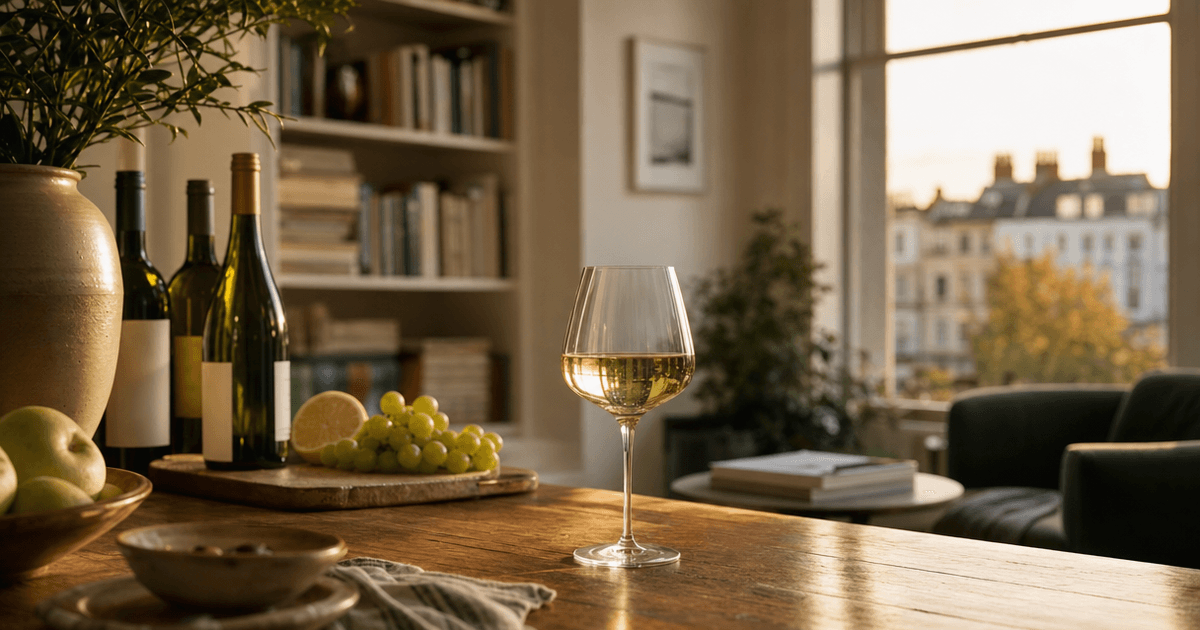
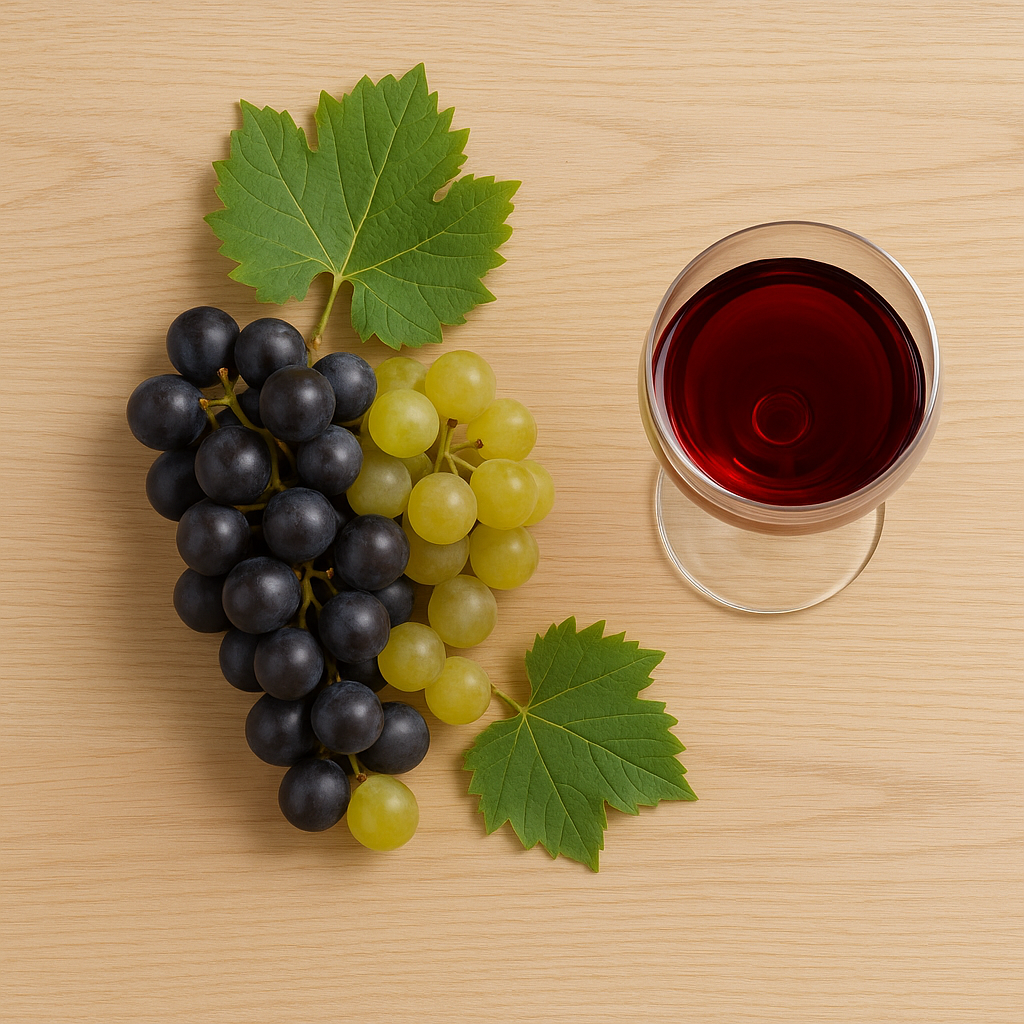
Pinot gris vs Pinot grigio hides a detail most drinkers never clock: both names mean grey. This grape is the odd one out of the white-wine world — a colour mutation of Pinot Noir whose berries ripen pinkish-grey rather than green, which is why some versions turn frankly copper in the glass. Pinot Grigio is the Italian name for the variety; Pinot Gris is the French one (Grauburgunder, if you’re shopping in Germany or Austria). By the end of this you’ll know why an £8 Veneto bottle and a £22 Alsace bottle can share a grape and taste like completely different drinks — and how to read the label, half-colour and all, so you end up with the style you actually wanted.
Which is better, Pinot Gris or Pinot Grigio?
Neither, honestly — it’s the same vine wearing different coats depending on where it’s grown and when it’s picked. Those in-between berries give the grape unusual stretch: picked early, it makes the lean, citrussy style associated with the Veneto. Left to ripen longer, it makes something fuller, spicier and more perfumed, the style Alsace built its reputation on. “Better” is really “better for what.”
I used to tell customers Pinot Grigio was simply the cheap one and Pinot Gris the serious one. That’s lazy, and it’s not quite true. The huge Delle Venezie denomination in north-east Italy — one of the largest single-variety wine zones in the world — does turn out an ocean of fresh, easy, deliberately neutral Pinot Grigio, most of it fermented in stainless steel to keep things zippy and inexpensive. Fair enough; it’s built for a Tuesday, not a decision.
But go up into the hills — Collio, Friuli Colli Orientali, Alto Adige — and producers are working lower yields, a soil called ponca (compacted marl and sandstone), sometimes a touch of oak or lees ageing, and the results can be genuinely age-worthy, mid to premium in price, and worlds away from the supermarket shelf version. Meanwhile some of the most interesting Pinot Gris going isn’t European at all — trade opinion points to Mornington Peninsula and Tasmania as sources of serious, structured examples labelled the French way. Same grape, wildly different ambition. If you want the full picture of how a grape’s identity shifts with geography, The Grape Guide: how a merchant reads a wine by its grape is worth a browse.
Is Pinot Gris sweeter than Pinot Grigio?
Not inherently — most bottles under either name are bone dry. Where sweetness genuinely turns up is in specific styles: Alsace makes late-harvest (vendange tardive) versions from this grape, and it’s also used in Crémant d’Alsace, which is dry sparkling, not sweet. So the name on the label tells you far less about sugar than the region and the words around it do.
What confuses people is body, not sugar. Pinot Gris has a natural tendency towards high sugar levels at ripeness alongside fairly gentle acidity — which, left unchecked, can tip into a soft, almost flabby richness. Dry-fermented in this way, it can taste sweeter than it is, simply because there’s less acid snapping it back. That’s the fuller Alsace style versus the racier Veneto style in a nutshell: not sugar difference, but ripeness and acid balance.
Then there’s colour — where those pink-grey skins stop being trivia and start showing in the glass. Riper Pinot Gris, especially with some skin contact, can pick up a coppery tint — the Italian word is ramato, from rame, meaning copper — a technique with roots in old Friulian winemaking and now revived in pockets of Australia (King Valley, Adelaide Hills) and elsewhere. Push the skin contact further and you land in orange wine territory: more grip, more texture, a faint tannic bite. None of it is about sweetness, but it does read as “richer,” which the palate can easily mistake for sweet.
How to choose one from the label
Once you know it’s one grape with several passports, choosing gets easier. Region and a handful of key words on the label do almost all the work — this is really the same instinct behind reading a wine label: the five things that matter, applied to one grape specifically.
| Style | Where it typically comes from | Body & character | Price shape |
|---|---|---|---|
| Crisp & neutral | Veneto, Delle Venezie DOC | Light, high acid, lemon and green apple | Inexpensive to mid-priced |
| Structured & mineral | Collio, Friuli Colli Orientali, Alto Adige | Medium body, sometimes lees or light oak, can age | Mid to premium |
| Full & spicy (Gris style) | Alsace | Fuller, pear and white pepper, heady perfume | Mid to premium |
| Coppery & textural | Friuli-inspired ramato, King Valley, Adelaide Hills | Light tannin, orange-tinged, more grip | Variable |
| Fruit-forward New World | New Zealand, western United States | Riper, rounder than Italian style, less full than Alsace | Mid-priced |
A word of caution from the trade: some New Zealand producers have taken to labelling a Gris-style wine as “Pinot Grigio,” simply because that name sells better on a supermarket shelf. It’s not fraud exactly, but it does mean the name alone won’t guarantee the style — check the region too. A similar instinct applies with Italian reds and the word Riserva; it’s worth knowing what Riserva actually means on a label before you assume it tells you about quality rather than time.
Price does most of the honest talking here. Cheap Pinot Grigio, from the Veneto or increasingly from Eastern Europe where costs run lower, is built to be inexpensive and uncomplicated — there’s a place for that, same as there’s a place for a second wine when you want the address without the flagship price. Pay more, and you’re generally buying a hillside site, lower yields, and a producer willing to let the grape show some personality.
Is Pinot Gris like Sauvignon Blanc?
Not really, no. They’re unrelated varieties with different instincts: Sauvignon Blanc tends towards sharper acidity and a more herbaceous, zesty profile, while Pinot Gris — especially in its fuller Alsace or Alto Adige forms — leans rounder, with stone fruit and a soft spice note. If you want to taste the difference for yourself without travelling far, Alto Adige is a handy shortcut: the region grows both Pinot Grigio and Sauvignon Blanc alongside Gewürztraminer and Chardonnay, often from neighbouring plots.
And the grey-pink ancestry we opened with is the deepest difference of all: Pinot Gris descends directly from Pinot Noir, which is why its berries blush and its wines can turn copper, while Sauvignon Blanc shares none of that family history. Similar shelf, different family entirely.
Serving it: temperature, glass, plate
Style should decide the glass and the temperature, not the label alone. A lean Veneto Pinot Grigio wants a proper chill and a simple plate — antipasti, a mild fish, a goat’s cheese, something that won’t fight its quiet citrus. It’s built to be drunk young; don’t hoard it.
A fuller Alsace or Alto Adige style earns a slightly warmer serve, more like a light Chardonnay than a Sauvignon Blanc — cold enough to be refreshing, not so cold you mute the pear and spice. It has the weight for roast or grilled chicken, richer white fish, even mildly spiced dishes; the best examples, per trade assessment, can genuinely improve with a few years in bottle. The coppery, skin-contact styles behave almost like a light red — try them a touch warmer still, with charcuterie or a smoked cheese.
Questions customers ask us
Is Pinot Gris a Riesling? No — a different grape family altogether. Pinot Gris descends from Pinot Noir; Riesling has its own separate lineage, mostly associated with Germany and Alsace. They sometimes sit near each other on an “aromatic whites” shelf, which is probably where the confusion starts.
Is Pinot Grigio only Italian? No — it’s grown widely: France (as Pinot Gris), Germany and Austria (Grauburgunder), New Zealand, Australia, and the western United States all produce it, each with their own tilt on the style.
What’s the difference between Pinot Gris and Pinot Blanc? They’re related — part of the same Pinot family — but distinct grapes with their own character; Pinot Blanc tends to be lighter and less aromatic than Pinot Gris.
Does Pinot Grigio age well? The everyday Veneto style is made for drinking young. The better hillside examples from Collio, Friuli Colli Orientali and Alto Adige, and the fuller Alsace style, are a different story — those can hold and develop for a few years.
The merchant’s last word
I’ve sold a lot of Pinot Grigio over the years that never deserved its reputation for being boring — and a fair bit of Pinot Gris that people assumed must be posh just because it wore the French name. Neither assumption holds up once you know what to look for on the label. Have a look through the grape variety cellar and pick the style that matches tonight’s plate, not the name you’re used to.



