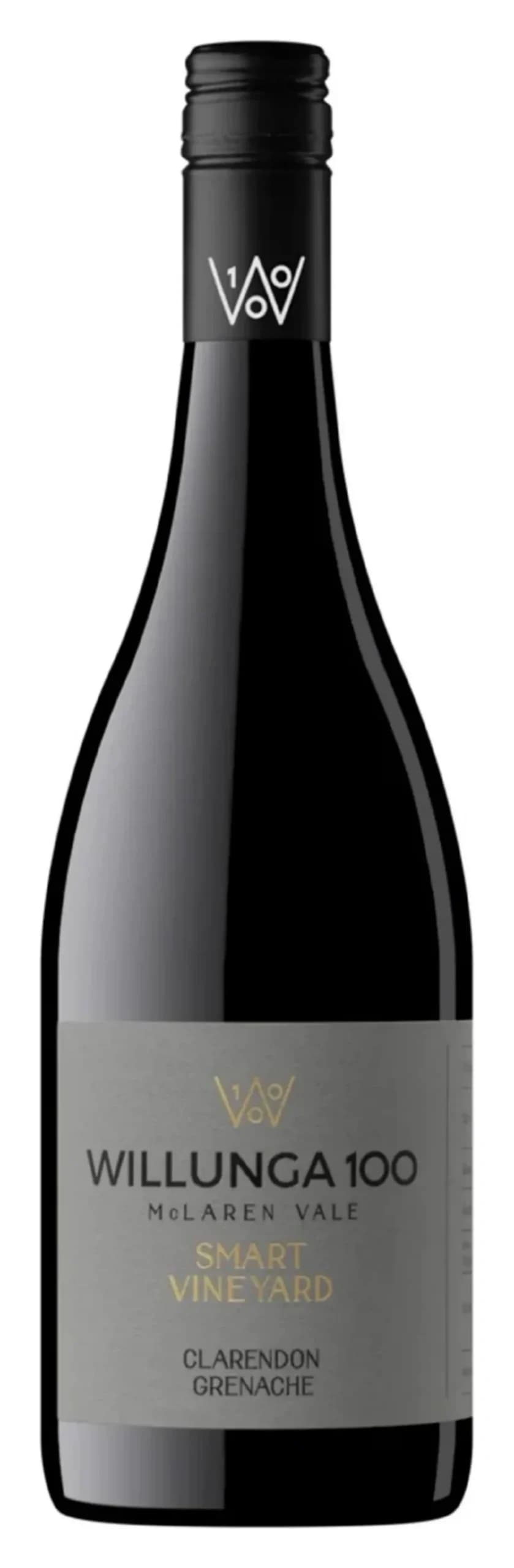
Most people assume Shiraz is the junior partner in the Shiraz vs Syrah question — the colonial copy of a French original. The vines say otherwise: some of the world’s oldest continuously producing plantings of this grape are Australian, believed to date to 1843, still in the ground and still making wine. So this isn’t a story about an original and an imitation; it’s one grape with two long, legitimate histories a hemisphere apart. France holds the birth certificate, Australia holds some of the oldest working vines — both claims are real, and neither cancels the other. By the end of this you’ll know which bottle to reach for on a Tuesday night with a pan of something rich on the hob, and which one deserves a decant and a good half hour of your attention — and why the same grape can taste like two different wines.
Syrah is what the French call it — and increasingly what South African and New Zealand winemakers reach for when they’re chasing something leaner and peppery — while Shiraz is Australia’s name for the big, warm, dark-fruited style that built its reputation abroad.
Same grape, opposite hemispheres
DNA testing in 1998 settled an old argument: Syrah is a genuine Rhône Valley native, the child of Mondeuse Blanche and a nearly forgotten black grape called Dureza. All the old stories about it travelling from Persia or Syracuse are just that — good stories, nothing more.
It made its way to Australia in 1832, brought over (probably from Montpellier) by James Busby, and took to New South Wales so well that it became the backbone of Australian red wine within a generation. Those 1843 plantings I mentioned are survivors of that first rush — barely a decade separates the grape’s arrival from vines still working today, which is a genuinely remarkable thing when you think about it. It’s why I bristle slightly when Shiraz gets talked down as the copy: on working vine age, Australia’s claim to this grape runs as deep as anyone’s.
For decades it was simply called Shiraz in Australia and Syrah everywhere else, with no real distinction beyond geography. That’s changed. As Australian winemakers have pushed into cooler sites, some have started putting “Syrah” on labels grown in places like Adelaide Hills, partly as an honest description of what’s in the glass, partly (let’s be honest) because the name carries a bit more prestige than Shiraz does in certain markets. If you want the fuller regional picture, our Australia and New Zealand: a merchant’s guide to the wines of the antipodes covers how those styles fit into the wider country.
How to choose: warm-climate Shiraz vs cool-climate Syrah
Climate is doing almost all the work here. A hot, dry summer in the Barossa ripens the grape’s dark fruit and tannin fully, sometimes past fully, while a cooler, longer season in the Northern Rhône or Adelaide Hills keeps the fruit tighter and the pepper notes intact. Hence my one rule of thumb for the shelf: buy by the vineyard’s summer, not the label’s spelling — climate writes the style, the name just reports it.
| Warm-climate Shiraz | Cool-climate Syrah | |
|---|---|---|
| Typical places | Barossa Valley, McLaren Vale | Northern Rhône (Hermitage, Côte-Rôtie, Crozes-Hermitage), Adelaide Hills, Yarra Valley, Tasmania |
| Body & alcohol | Full-bodied, higher alcohol | Medium to full, more restrained |
| Tannin | Soft, ripe, sometimes plush | Firmer, more structured |
| Fruit character | Cooked or dried black fruit, liquorice | Red and black cherry, pepper, sometimes floral |
| Oak | New American oak traditional, French increasingly used | Used more sparingly, to protect aromatics |
Neither column is “correct.” A Barossa Shiraz built for a Sunday roast with all the trimmings is doing its job properly — some of it off vines with the better part of two centuries behind them; so is a Crozes-Hermitage that’s all pepper and violets alongside a plate of lamb. A practical steer: if your reference point is that rich Sunday roast, start in the Barossa or McLaren Vale column; if Pinot Noir is your comfort zone, start with Adelaide Hills, Yarra or a Crozes-Hermitage and work up. If you want to see how far the Barossa style in particular can be pushed, we’ve written more on that in Barossa Shiraz: what makes it taste the way it does?
Is Syrah or Shiraz sweeter?
Neither, technically — both are dry wines, no residual sugar doing the heavy lifting. What you’re tasting as “sweetness” in a big Australian Shiraz is ripeness: riper tannins, higher alcohol, and fruit that reads as jammy or cooked rather than fresh, which the palate reads as sweet even though it isn’t. It’s really the hemisphere question hiding inside a sugar question — how much sun the fruit saw, not how much sugar the wine kept.
A Northern Rhône Syrah, picked earlier in a cooler season, keeps more of that tart, savoury edge — think black cherry rather than cherry jam, dried herbs rather than dark chocolate. South African Shiraz sits somewhere in between and genuinely varies producer to producer, which makes it hard to generalise about (I’ve learned not to try, after being caught out more than once recommending a “big” South African Shiraz that turned out beautifully savoury and restrained).
The trend, even within Australia, has been away from the jammiest end of the spectrum. Winemakers are using gentler extraction, whole bunch fermentation and less new oak to bring the pepper and spice back into focus, even in warmer sites. If that ripe, generous character is what you love, say so plainly at the counter — it’s a ripeness request, and one of the easiest there is to fill.
Why is Syrah so good?
Syrah earns its reputation through sheer range: it can produce wines that age for decades in Hermitage, and lighter, more everyday bottles that are ready on a Wednesday. Add in its role as the world’s sixth most planted red or white grape and its long Rhône pedigree, and you’ve got a variety that rewards attention at almost every price point. And fittingly for this article, both hemispheres supply the evidence.
The northern half of the case is Hermitage. Its reputation in the 18th and 19th centuries was so strong that plenty of red Bordeaux was quietly strengthened with it — a practice historians call being “Hermitagé.” That’s not a footnote; that’s one of France’s most prestigious wines being used to prop up another region’s reputation. The southern half of the case is those ancient Australian vines, still producing after the better part of two centuries — longevity in the ground to match longevity in the bottle.
Syrah also blends generously, which is part of its charm rather than a weakness. In the Rhône it sits alongside Grenache and Mourvèdre in classic blends that Australia has borrowed wholesale as “GSM.” In Côte-Rôtie, the finest examples are co-fermented with a splash of the white grape Viognier, which lifts the aromatics without lightening the wine — a technique Australian producers making premium Shiraz-Viognier blends have adopted directly. Wherever you start, this is a grape that repays trading up slowly: everyday bottle first, old-vine or single-site bottle when it’s earned your trust.
Is a Syrah like a Pinot Noir?
Not really — Syrah is thicker-skinned, more tannic and generally fuller-bodied than Pinot Noir, which is a genuinely different animal at the vine level. Where the comparison holds a bit of water is at the cooler, more restrained end of Syrah’s range, where the perfume, savoury lift and lighter frame can feel closer to Pinot territory than to a big Barossa red.
Don’t let that comparison run away with you, though. Even a delicate Crozes-Hermitage has more grip and colour than most Pinot Noir will ever show — it’s a matter of degree, not identity. And if you’ve come across Petite Sirah on a shelf somewhere, that’s a different grape again, not a smaller or gentler version of either Shiraz or Syrah — worth remembering the next time the syrah vs shiraz vs petite sirah question comes up at a tasting.
Getting it on the table: serving Shiraz vs Syrah
A big, structured Shiraz or an aged Hermitage benefits from the same patience you’d give an aged Barolo — decanted an hour or so ahead, poured into a decent-sized glass so the aromatics have room to open up. Our guide on how to serve an aged Barolo covers the timing and glassware logic in more depth, and most of it transfers directly.
Lighter, cooler-climate Syrah doesn’t need the same ceremony — a shorter rest, a slightly cooler serve, and it’s ready. Both styles want red meat and richer, spiced dishes rather than anything delicate; fish, lighter seafood and shellfish are the wrong direction entirely. For the fuller logic on why some pairings work and others fight each other, our complete guide to food and wine pairing is worth a read before your next dinner party.
Questions customers ask us
What do the French call Shiraz? Syrah — that’s the grape’s original name, and it’s what you’ll see on every French label, from the Northern Rhône down through the Languedoc.
Is Petite Sirah the same grape as Syrah or Shiraz? No, it’s a separate variety with its own identity, not a junior version of either. Worth knowing so you’re not caught out expecting Rhône character from a completely different grape.
Does Shiraz taste different across Australian regions? Very much so — Barossa and McLaren Vale sit at the bold, dark-fruited end, while Adelaide Hills, Yarra Valley and Tasmania produce something leaner and more peppery, closer to the Rhône template.
What should I serve alongside each style? Big warm-climate Shiraz wants rich, fatty cuts and confident spicing; cooler Syrah prefers leaner meat and herbs. Steer both well clear of delicate fish or shellfish.
The merchant’s last word
I used to think this was a simple naming quirk until a customer asked me straight out why her “Shiraz” from New Zealand tasted nothing like her usual Barossa bottle — and I realised I’d been glossing over the actual answer for years out of habit. It’s climate, not confusion — and on vine age alone, Australia’s claim to this grape runs as deep as anyone’s. Once you know that, choosing gets easy: pick by style, not by which word’s on the label. Go and browse the Australia cellar and see which end of the spectrum suits your Tuesday.