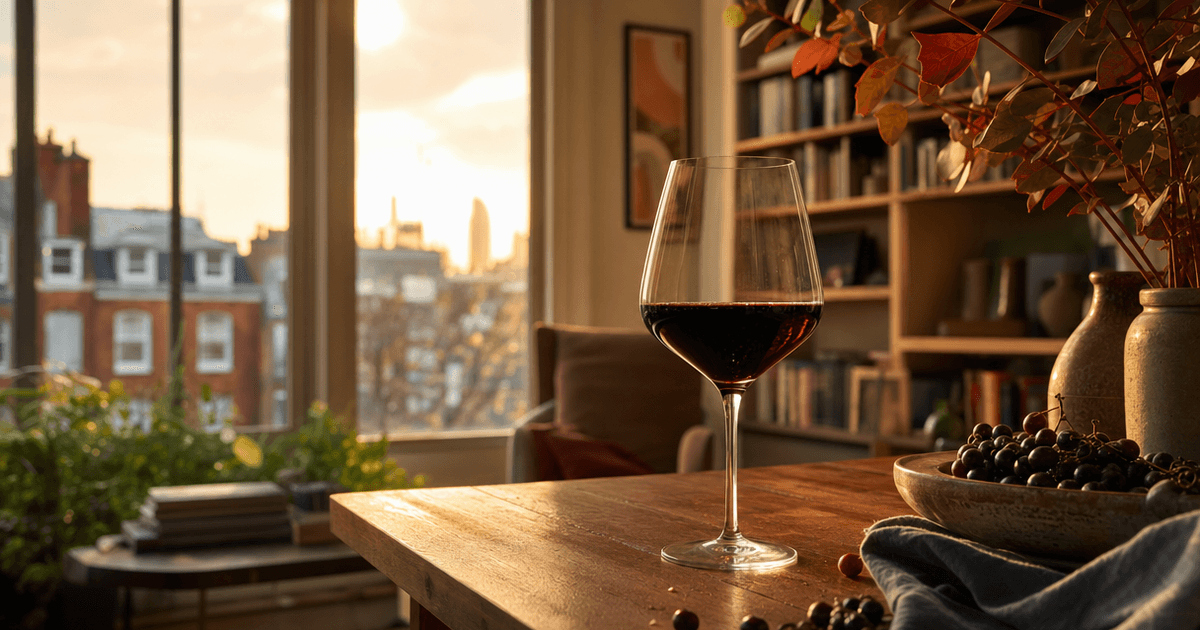
Barossa ink Shiraz isn’t a bottling I can sell you — it’s shorthand, and useful shorthand at that: the near-black, glass-staining style of Shiraz the Barossa valley floor is famous for, so dark that barely a rim of light gets through when you tilt it against a white tablecloth. Colour is the one thing in wine you can read before you’ve paid for it, and the Barossa built a global reputation on being legible from across the room. But here’s the merchant’s caveat that this whole piece hangs on: ink is evidence of ripeness, never a verdict on quality. That colour is the visible record of some of the world’s oldest continuously producing vines working a hot, dry valley — the same forces that make the wine full-bodied, ripe-tannined and generous with dark fruit, sometimes tipping into cooked or dried notes rather than fresh ones. By the end you’ll know what actually builds the ink, how to choose between the region’s different faces, and how to serve it so it shows more than its size.
Is Barossa Shiraz a good wine?
Yes — often outstanding — but that one name covers a wide spread, and the spread is where buyers get caught. Years back, Barossa Shiraz earned a reputation for being overripe, heavy and swimming in new oak: bottles whose colour promised drama and whose palate delivered only weight. That reputation wasn’t invented from nothing. Plenty of wine really was made in that mould, and some still is.
What’s changed isn’t the climate — a warm valley makes rich, concentrated Shiraz easy, and that was never the problem. What’s changed is the work: picking a touch earlier than instinct suggests, watching harvest timing more carefully, a gentler hand once the fruit’s in the winery. The best bottles today keep the power but add real complexity and — the word that used to be missing from Barossa reds entirely — lift.
I sold the big, jammy style as “classic Barossa” for years, because that’s what people walked in expecting, and the colour did half my selling for me. It took me embarrassingly long to notice the better bottles were doing something quieter underneath all that size. If you wrote the region off a decade ago, it has honestly earned another tenner of your money.
What gives Barossa Shiraz its deep, inky colour?
Three things, roughly in this order: climate, vine age, oak. Nothing mysterious — but worth taking one at a time, because each leaves a different fingerprint in the glass.
Climate first. The valley floor around Tanunda, Nuriootpa and Marananga runs hot and dry through the growing season, which pushes sugar and tannin ripeness hard. That’s the source of both the near-black colour and the soft, rounded tannin most people notice before anything else.
Vine age stacks concentration on top. Old bush vines — some over a century in the ground — give smaller berries with thicker skins, which means more of everything packed into every drop. This is the part of the ink no winery trick can fake.
Oak, historically, meant new American barrels: the vanilla, coconut and sweet baking-spice you’ll often find riding alongside the black fruit. That’s shifting — more Barossa producers now use French oak, and increasingly larger 500-litre puncheons and old foudres rather than small barriques, which softens the wood’s fingerprint and lets the fruit do more of the talking.
Climb into Eden Valley — higher ground within the same broader Barossa zone — and the recipe changes. Cooler nights put the Shiraz somewhere between the very ripe valley-floor style and the peppery, cool-climate versions further south: ripe but genuinely fresh plum and blackberry, sweet spice from the oak rather than domination by it. Cabernet Sauvignon does well on these cooler sites too, and Shiraz-Cabernet has been blended in the Barossa for well over a century — one of Australia’s oldest, most respected pairings, long before varietal labelling made the practice visible on the front label.
A rule of thumb for the whole zone, and the most useful sentence in this piece: the darker and softer the wine, the lower and hotter the vineyard; the fresher and more peppery it tastes, the higher the vines sat. Decide which side of that line you want before you spend a penny — it narrows the shelf beautifully.
How to choose between Australian Shiraz regions
The Barossa is the loudest name in Australian Shiraz, but not the only shape the grape takes, and knowing how the regions actually differ helps more than any tasting note.
| Region | Body & alcohol | Fruit character | Oak & tannin |
|---|---|---|---|
| Barossa Valley | Full-bodied, high alcohol | Ripe, often cooked/dried black fruit | Soft tannins; traditionally American oak |
| Eden Valley | Medium to full | Ripe but fresh plum, blackberry | Sweet oak spice, fresher finish |
| McLaren Vale | Full-bodied, high alcohol | Dark fruit, can turn jammy on hot sites | Oak-driven spice; higher sites bring more acid and tannin |
| Clare Valley | Full-bodied, high alcohol | Ripe black fruit with a minty, eucalyptus edge | Medium-plus acidity and tannin |
| Coonawarra | Lighter-bodied than Barossa | Concentrated blackberry, herbal/minty notes | Often blended with Cabernet Sauvignon |
Trade plantings figures put Shiraz at roughly 60% of the vineyard in both Barossa Valley and McLaren Vale, so in both places it’s genuinely the regional signature, not just the famous export. If you want the archetypal valley-floor experience — big, warm, soft-tannined, ink in the glass — stay around Tanunda or Stonewell. If you want something recognisably Barossa but with a cooler edge, ask for Eden Valley by name.
On money: under about £12, stick to straightforward valley-floor bottlings and drink them young and warm-hearted, exactly as intended. The mid-teens to mid-twenties is where old-vine fruit and gentler oak handling start showing up in the glass. Above that, you should be able to taste the vineyard, not just the sunshine — and if you can’t, bring it back and tell me.
What is the world’s best Shiraz?
There isn’t one, and any merchant telling you otherwise is selling you something else entirely. Shiraz — Syrah in French — grows successfully across wildly different climates: the Rhône, the Barossa, the Pyrenees in Victoria, Frankland River in Western Australia, even the Canberra district. Each place shapes it differently.
Trade competitions do crown a “best in show” Shiraz most years, and Barossa wines turn up near the top with real regularity — that reflects genuine depth of quality, not luck. But cooler-climate Australian Shiraz, from places like the Canberra district, can show a peppery, aromatic side much closer to northern Rhône Syrah, sometimes with a splash of Viognier co-fermented in. For the fuller story on why one grape reads so differently depending on where it’s grown, our piece on Syrah vs Shiraz: same grape, two accents goes into that properly. “Best” really just means best for what you’re eating — and for how big a wine you actually want on a Tuesday.
Serving it right
Barossa Shiraz doesn’t need much fuss, and that’s part of the appeal. A big-bowled glass helps — the wine needs room to open. Serve it a touch cooler than room temperature, never warm: heat exaggerates the alcohol and flattens everything underneath it, and with a wine this size there’s a lot of underneath to lose.
Young bottles want thirty minutes to an hour of air, achieved simply by pouring and letting the glass sit — nothing like the careful ritual an aged Barolo demands (if that’s your world, how to serve an aged Barolo is worth a read, if only to see how different the two jobs are). On the plate: lamb shoulder slow-roasted with rosemary, a proper beef and ale pie, anything with char off a barbecue. The soft tannins and dark fruit want fat and smoke, not delicacy. Get the temperature right and even a modest bottle steps up a class — the cheapest upgrade in wine.
What it costs in shape
Entry-level Barossa Shiraz, made simply and drunk young, is perfectly good honest drinking — no shame in it at all. The trickier bracket sits in the middle: a fair amount of moderately priced Shiraz there leans on ripe fruit and a few lashings of oak and not much else, and the sameness wears you down after a glass or two. This is where the colour test fails hardest — the mid-priced bottle is often every bit as dark as the serious one, and darkness is the only promise it keeps.
Further up, where dry-farmed old vines, gentler oak handling and real patience at harvest start to show, things get interesting again: more shape, more lift, less brute force doing the work. That’s the bracket where the ink stops being the whole story and becomes the cover of a decent book. If warm-climate reds are your thing more broadly, it’s worth a sideways glance at Washington State’s desert vineyards, which do something similarly bold with Syrah and Cabernet — a different accent on the same idea. And for the wider lay of the land, our guide to Australia and New Zealand wine is a good next stop.
Questions customers ask us
Do I need to decant Barossa Shiraz? Not really — a good pour into a wide glass thirty minutes ahead does the same job for a young bottle. Older, more structured examples can benefit from a full hour.
What’s the difference between Barossa Valley and Eden Valley Shiraz? The valley floor gives you the bigger, softer, more cooked-fruit style; Eden Valley, being higher and cooler, gives fresher plum and blackberry with a lighter touch of oak spice.
Is Barossa ink Shiraz a specific wine I can buy? Not from me it isn’t — it’s a description, not a bottling I can vouch for: shorthand for the near-black, near-opaque colour that old bush vines and a hot, dry season produce. If you see “ink” on a shelf ticket or in a tasting note, read it as a colour claim and then ask the questions colour can’t answer — who made it, how high the vines sat, and what the oak was up to.
The merchant’s last word
I’ve poured a lot of Barossa Shiraz across a lot of counters, and the bottles that stuck with me were never simply the darkest ones. Colour gets a wine picked up; everything else decides whether it gets bought twice. So ask what a wine actually tastes like once the oak settles down, not just how black it looks held to the light — and if that’s put you in the mood, go and browse the Australia and New Zealand cellar. I’ll be here if you’ve questions on the way round.