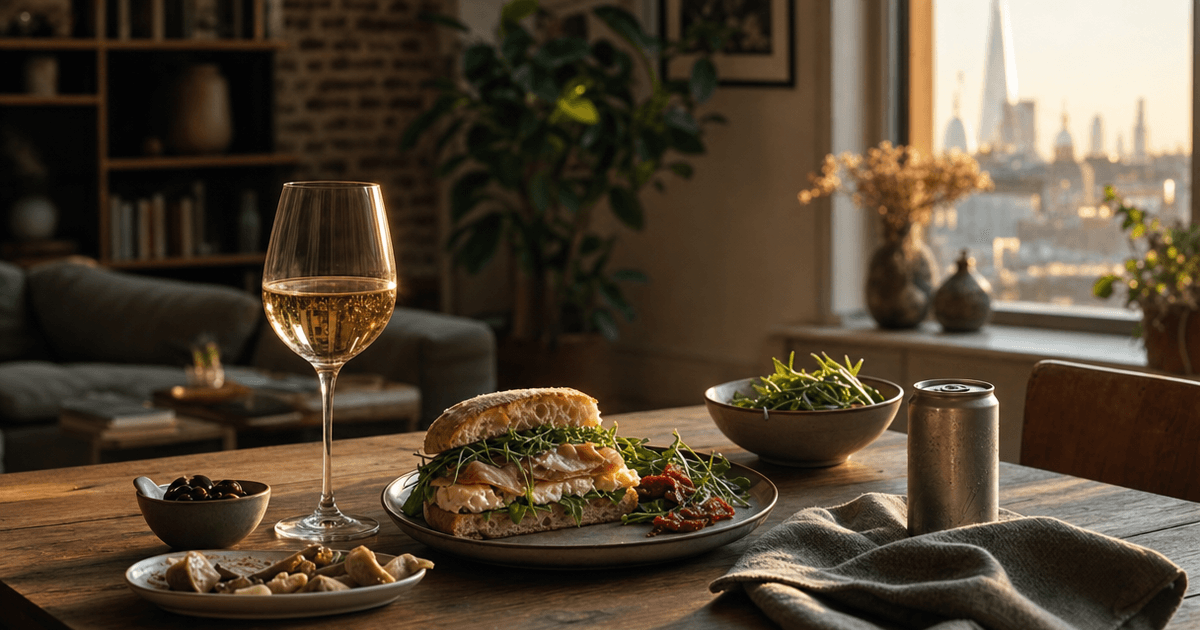
Lunch wine pairing is the only pairing question that comes with a clock attached: dinner gives a wine all evening to open up and explain itself, while lunch gives it fifteen minutes and one modest glass. That deadline — a sandwich, standing at the counter, daylight still ahead of you — changes what belongs in the glass more than any recipe does. A lunch wine pairing is a wine chosen to sit alongside a midday meal without overpowering it — lighter in alcohol than an evening bottle, sharper in acid, poured smaller. By the end of this you’ll know which bottle earns that one short glass, and when a splash of something chilled beats pouring a full one at all.
What is a good food and wine pairing?
A good pairing is one where neither the food nor the wine has to shout over the other — and at lunch, with one glass and no second chances, that bar matters more than usual. I sort it by weight first — light wine with light food — then by acid, so a sharp filling wants a wine with its own edge, and flavour comes last. For a sandwich, that means matching the wine to the wettest thing between the bread, not to the bread itself.
For an everyday sandwich — cheese and pickle, ham and mustard, nothing fancier than that — the safe list is Beaujolais, beer, dry Riesling, or, if you’d rather skip the alcohol entirely, iced tea or lemonade. Cold sliced meat served at room temperature sits well with a light-bodied, red-fruited Pinot Noir, often from California — it doesn’t fight the fat, and the same style turns up again against salami and cured cold cuts, alongside Barbera, Bardolino, and dry Riesling. That crossover tells you something: it’s a genuinely flexible style for anything cured and sliced thin. Don’t ignore the bread itself, either — a proper crusty roll pairs with ale, beer, or a buttery, oaked Chardonnay, which flatters crust and crumb as much as filling. For the fuller framework behind all this — why weight comes before flavour, and why acid does most of the actual work — Food and wine pairing: a merchant’s complete guide to getting it right covers it properly.
What is the 20 minute wine rule?
The 20 minute rule is shorthand for serving temperature, not decanting — nobody’s got an hour at lunch. A white or rosé that’s come out of the fridge too warm wants roughly 20 minutes properly chilled, ice bucket or coldest shelf, before you pour it. A red that’s spent the morning somewhere cool wants the reverse: about 20 minutes at room temperature to open up.
It matters more at lunch than at dinner, because you’re drinking less over less time, and the wine has less chance to correct itself in the glass while you’re talking. A dry Riesling served too warm goes flabby and loses the acid snap doing the actual work against mayonnaise or vinegar; a red poured fridge-cold, straight from a chiller cabinet, tastes tight and mean. Twenty minutes either way usually fixes both without anyone reaching for a thermometer.
The sandwich, pinned down
The wine that flatters a BLT isn’t the one that flatters a pastrami on rye — worth pinning down properly rather than reaching for whatever’s open. Here’s the shortlist I’d keep by the fridge:
| Sandwich | Pour this |
|---|---|
| BLT | dry rosé, Chianti, or sparkling wine |
| Pastrami on rye | Zinfandel, Champagne, or a darker lager |
| Salami and cured cold cuts | Barbera, Bardolino, or dry Riesling |
| Tuna salad, plain | Sauvignon Blanc |
| Tuna salad, with mayonnaise or sweet relish | a dry, young white |
| Prosciutto | Prosecco or dry Muscat |
| Croque monsieur | Beaujolais or Chardonnay |
| Chicago-style, with all the trimmings | demi-sec Vouvray or Zinfandel |
| Chicago-style Italian beef sub | Sancerre |
| A breaded, fried fish sandwich | New Zealand Sauvignon Blanc |
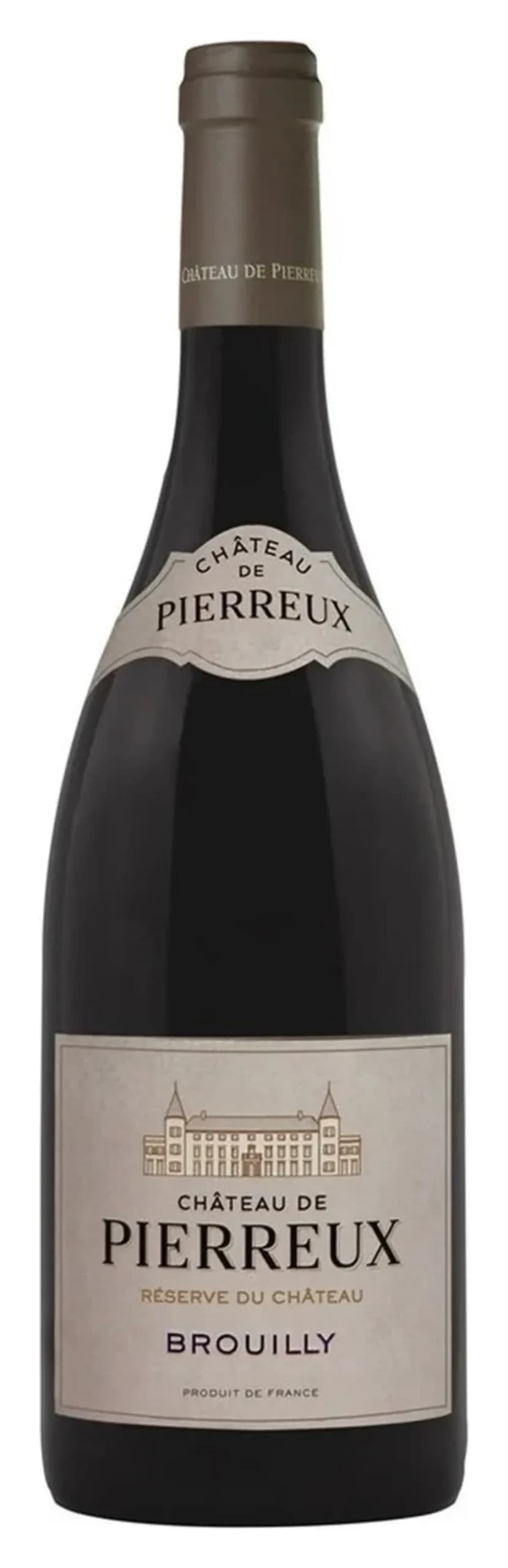
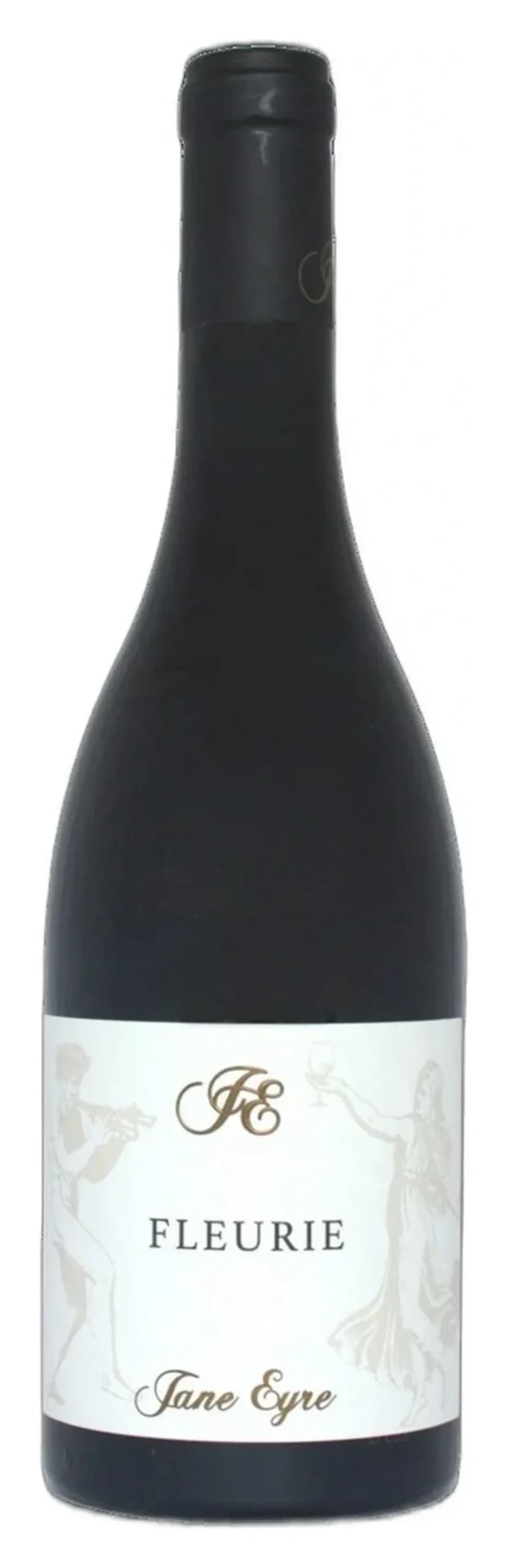
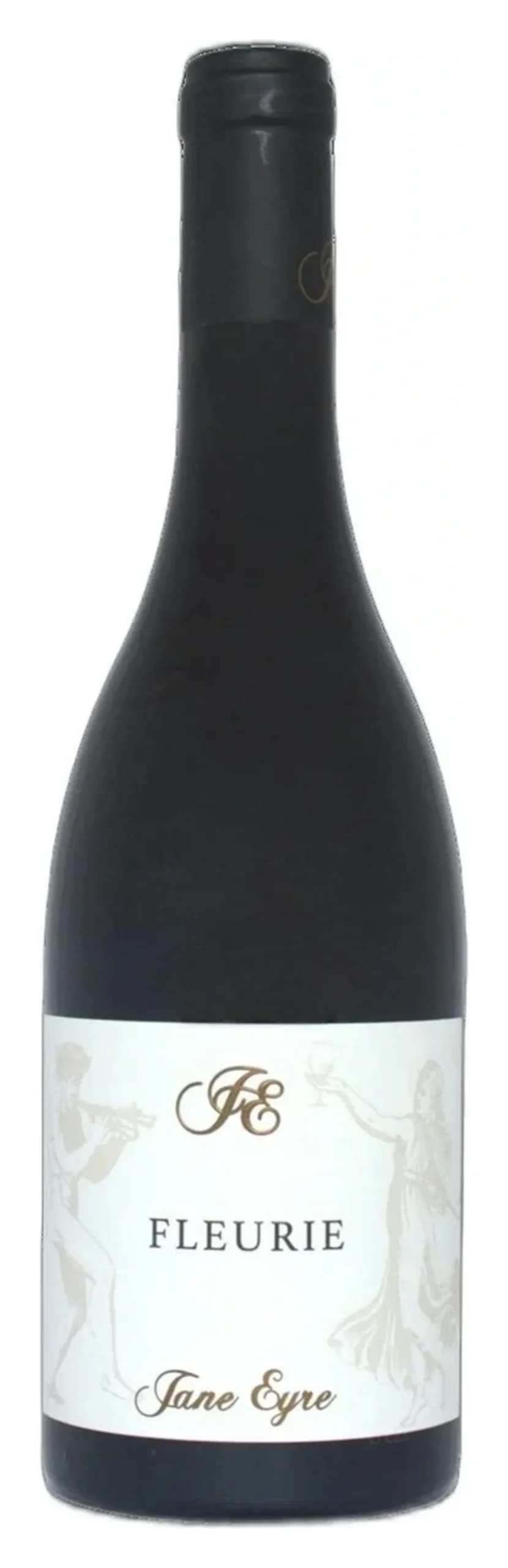
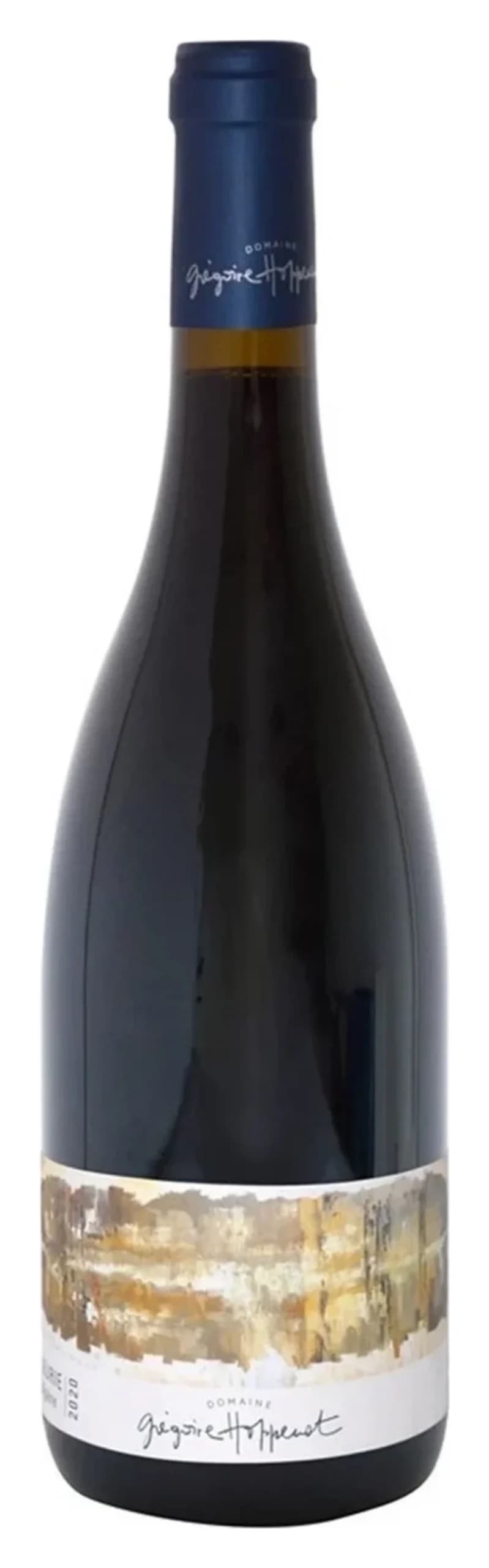
None of that table needs to cost serious money, either — a bottle around the £10 mark of young Beaujolais, dry rosé or dry Riesling covers most of it in a single shop.
What are the basic rules of wine and food pairing?
The rule I lean on hardest: acid cuts fat, and fat softens acid. A high-acid white or a bright red like Chianti or Beaujolais slices through a mayonnaise-heavy or fatty filling and leaves the mouth clean for the next bite, rather than coated. Beyond that, match a sharp condiment with a wine that already carries its own edge, and a rich sauce with a wine that carries real body, not just flavour.
Mustard has its own rule — Chardonnay specifically, especially against Dijon, where the wine’s roundness takes the edge off the heat. Mayonnaise-based fillings pull a slightly wider net: Chardonnay again, but also Pinot Blanc, Riesling, and Sauvignon Blanc all do the job. The wider family of acidic wines worth reaching for against fatty, salty, or vinegar-forward food runs from white Bordeaux, Champagne, Chenin Blanc, Muscadet, Pinot Grigio, Sancerre, Sauvignon Blanc, and Vinho Verde on the white side, to Beaujolais, red Burgundy, Chianti, Gamay, and Sangiovese on the red — the same list that works for charcuterie, pâté, and a vinaigrette-dressed salad, not sandwiches alone. Beaujolais and its grape earn a place on nearly every one of these lists, worth understanding properly in Gamay: what Beaujolais Nouveau never told you about its grape. And if a full-price white Bordeaux feels like overkill for a Tuesday sandwich, a second wine from the same commune carries the same acid backbone for rather less.
Take the same logic outdoors and the picnic list widens further: light-bodied or white Zinfandel, dry-to-off-dry Riesling, Spanish dry rosé, sparkling wine, and an inexpensive red or white served properly chilled all earn their spot — a picnic asks for wine that forgives warm weather and paper cups, not wine that needs fussing over. If your weekday lunches lean fatty and sharp — mayonnaise, pickles, vinaigrette — buy from that acidic family above and you’ll rarely be caught out.
From the shop counter
Beer isn’t a fallback here — it belongs on almost every sandwich list going, especially a dark lager alongside a BLT or pastrami, and pilsner with a Chicago-style Italian beef sub. Iced tea, lemonade, and soda sit right next to the wine on the same lists, treated as equally proper choices rather than what you drink when you can’t be bothered opening a bottle.
European lunch habits make a fair point worth borrowing: in plenty of cities across the continent, a glass of white wine alongside a salad or sandwich at midday raises no eyebrows — it’s ordinary, not an occasion. The trick, borrowed sensibly, is picking something genuinely light. Prosecco does the job well, easy-drinking and happy alongside salads, soft cheeses, and most fillings without asking much of you. Vinho Verde, the slightly effervescent Portuguese white, carries high acid and low alcohol in the same glass — about as good a lunchtime specification as exists, and if this page sends you shopping for just one bottle, make it that.
For a saltier, cured filling — proper ham, a good pâté — dry Fino or Amontillado sherry sits on the same general savoury list as Beaujolais and tawny port. The difference between Fino and its salty, sea-air cousin Manzanilla is worth its own read: Manzanilla vs Fino: what the sea does to Sherry.
Sandwiches and burgers share a pairing logic — start bright and acidic, add weight as the filling gets richer. A proper multi-course lunch just stretches the same instinct out over an afternoon: more body course by course, finishing rich or sweet, plated instead of stacked between two slices of bread.
Questions customers ask us
Is there a “best” pairing I should just default to? Not really — it depends entirely on what’s actually in the sandwich, which is why the table above earns its keep. If you insist on one bottle for all comers, pick something with acid to spare and pour it cold.
Do I need a different glass for lunch wine? No, though a smaller pour helps — this is a midday meal, not a dinner party, and the lighter styles suited to lunch don’t need room to open up the way a big red does.
What if I just want something cold and simple? Then go straight to a dry rosé or a light Beaujolais and don’t overthink it — chilled properly, either one gets you fed, watered and back to your afternoon with no drama.
The merchant’s last word
I’ve sold wine to people rushing back to a desk with a sandwich in one hand, and I’ve learned not to overcomplicate it for them. Pick something with a bit of acid, chill it properly, pour a sensible glass, and get on with your day. If you want a bottle already suited to exactly this, browse the Beaujolais cellar and I’ll point you to something that won’t need explaining.