Knowing when to drink Bordeaux means learning to read two clocks at once. One ticks in minutes — the twenty or so between pulling the cork and the wine tasting like itself. The other ticks in decades — the years between the vintage and the bottle’s best evening. Most disappointing claret isn’t bad wine; it’s wine caught on the wrong clock, opened before the tannin and acid it’s built on have had their time to settle. By the end you’ll know how long to let tonight’s bottle breathe, how to read whether a vintage is ready or still finding its feet, and what “strong” really means when someone says it about claret.
What is the 20 minute rule for wine?
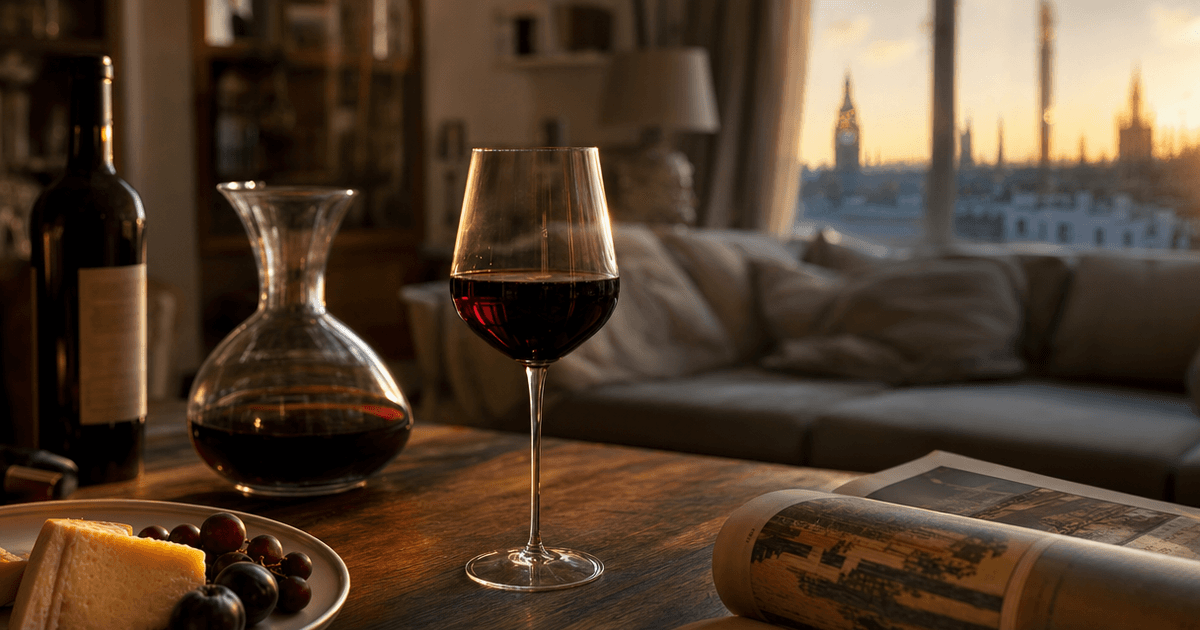
Give a tannic young red a head start and it rewards you: uncork or decant around twenty minutes before you plan to drink, letting the wine open up so the fruit comes forward and the grip softens. Treat it as a starting point rather than gospel, though. A sturdy four-year-old Left Bank Bordeaux may need the whole twenty minutes and then some, while a fifteen-year-old bottle can lose its shape entirely if you give it the same treatment.
I used to decant everything the same way for years — a hard splash into a jug, job done. It took a few tired, flat old bottles for me to ask the better question: not “how long?” but “how old, and how gently?” Young, structured claret from somewhere like Pauillac or Saint-Estèphe can take that vigorous splash — it needs the oxygen to shake loose. An older bottle from the same commune wants standing upright for a day so the sediment settles, then a slow, steady pour with barely a ripple.
The practical version costs nothing but patience: pour one glass first, taste it, and if it’s tight and closed, give the rest twenty minutes and taste again. That’s the short clock read properly — at the table, not from a book.
Does Bordeaux get better with age?
Yes — but only some of it, and only for a while. Trade reference puts red Bordeaux’s typical drinking window at roughly 5 to 25 years from vintage, a span wide enough to cover a simple Bordeaux AOC drunk on a Tuesday and a serious Left Bank wine built for the long haul. Most everyday wine, red or white, is at its best within a year or two of bottling — ageing well is the exception, not the rule.
Where Bordeaux sits against other regions is worth knowing before you buy for the cellar rather than the table:
| Region | Typical drinking window (years from vintage) |
|---|---|
| Bordeaux, Madiran | 5–25 |
| Burgundy | 4–20 |
| Rioja | 5–20 |
| Barolo, Barbaresco | 6–25 |
| Northern Rhône | 4–15 |
| Southern Rhône | 3–10 |
| Chianti | 4–10 |
| Vintage Port | 12–50 |
Bordeaux’s range is wide because the region itself is wide — there’s no single answer to when to drink Bordeaux, only patterns — and the long clock runs at a different speed for every bottle. Lighter vintages come round faster than robust ones. Wines from the Côtes or at Cru Bourgeois level generally age more quickly than serious Pauillac or Pomerol. Sandy soils tend to give more fragrant, earlier-drinking wine; clay-heavy sites usually need longer. None of that is a hard rule — it’s the shape of the thing, not a formula. For a fuller picture of which styles reward cellaring at all, Which wines actually improve with age? is worth a read before you commit a case to the rack.
Is Bordeaux a strong wine?
“Strong” usually means one of two things — alcohol or tannin — and Bordeaux isn’t shy on either front, though it isn’t a bruiser. Claret typically sits in a moderate-to-full range for alcohol by volume; what people actually notice is tannin and acid, not raw boozy strength.
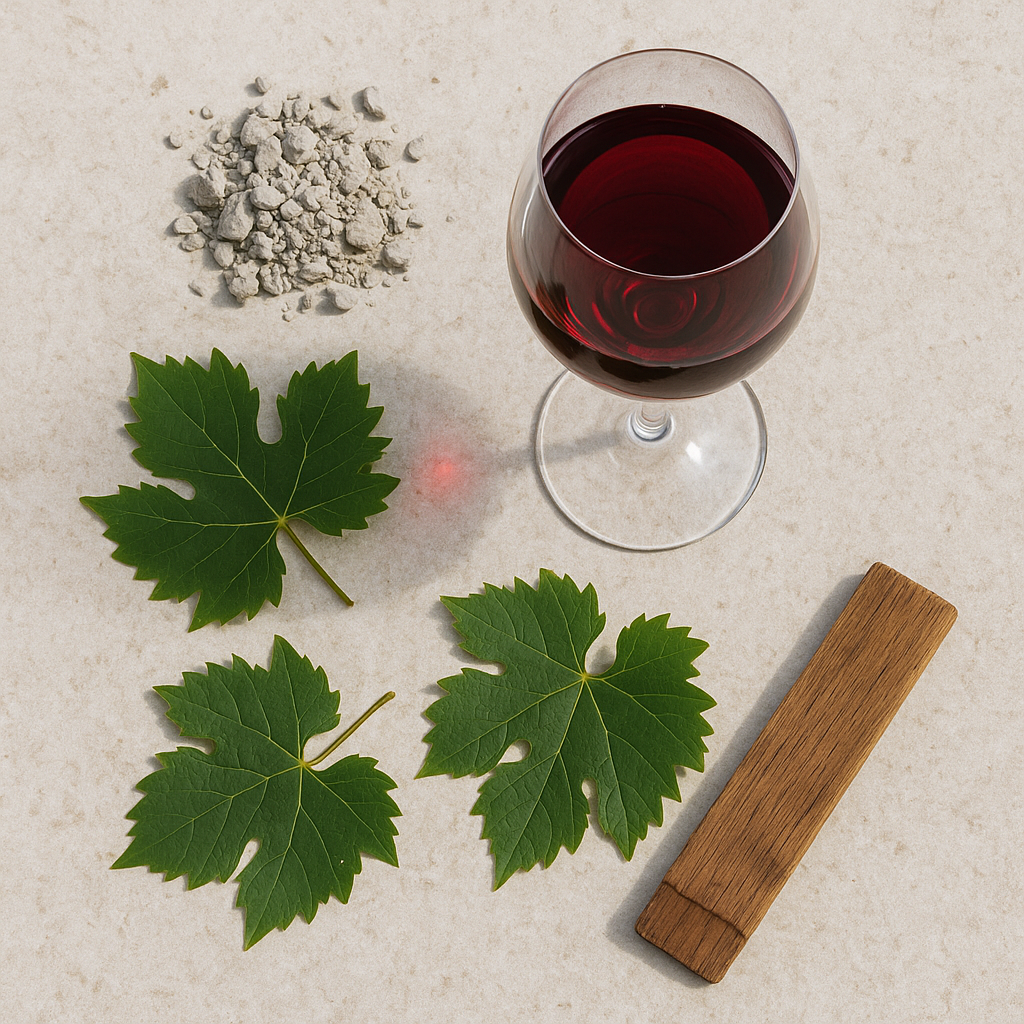
Tannin is the dry grip you feel on your gums after a young, Cabernet-heavy glass — it comes from grape skins during fermentation, topped up by time in oak. Acid is what keeps the wine feeling fresh rather than flabby once the tannin has softened. Together they’re what people mean by “structure”, and they’re exactly why young Bordeaux needs time before it feels generous rather than gripping.
Merlot-dominant Right Bank wines — Pomerol, Saint-Émilion — tend to feel softer and rounder young than Cabernet-led Left Bank wines from Margaux, Pauillac or Saint-Julien, which can stay firm and reserved for years. That firmness is the structure doing its job, not the wine being fierce.
Reading a vintage: why the year on the label matters
Vintage charts are a rough guide at best. Within any single year, some estates make forward, early-drinking wine and others make something built to last, depending on picking dates, grape mix and the soil under the vines — that’s before you even get to the fact that young Bordeaux is often judged and written about while still in barrel, only months old, which can flatter or mislead.
The practical shortcut: in a big, structured vintage, the grandest, most concentrated wines usually need longer than everyday bottles from the same harvest — a Cru Bourgeois or a wine from the Côtes can be drinking well while a serious Pauillac from the identical year is still finding itself. If you’re holding an older bottle and unsure where it sits, a quick check with whoever sold it to you beats guessing on the night. For the fuller story on why the year matters as much as the region, Vintage variation: does the year on the bottle matter? goes into that properly.
How to serve it once it’s ready
Once you know roughly where a bottle sits, serving is straightforward. Stand an older bottle upright for a day beforehand if you can, so sediment settles rather than clouding the glass. Decant young, tight Bordeaux with a bit of vigour to wake it up; decant old Bordeaux slowly and gently, over a candle or torch if you’re checking for sediment, and don’t leave it exposed to air for hours — fragile old wine tires quickly once poured.
Pour less than you think. A smaller glass, tasted and topped up as the evening goes on, tells you more about a bottle’s mood than a full glass poured on faith.
If any of this feels like more than you bargained for on a Tuesday, our Bordeaux without the intimidation: a merchant’s map walks through the region itself — communes, classifications, styles — without the exam-paper tone.
Questions customers ask us
Should I buy Bordeaux en primeur? It can work out well for scarce, sought-after wines bought young and cellared properly, but pricing has swung both ways in past campaigns. It suits a buyer happy to wait years for delivery, not someone after a bottle for next weekend.
Does cork versus screwcap change the ageing window? Broadly, cork-sealed wines are thought to develop more slowly than the same wine under screwcap. Nearly all serious Bordeaux is still sealed under cork, which is part of why the long, slow drinking windows exist in the first place.
Why do critics sometimes disagree on when a Bordeaux is ready? Habit and personal palate both play a part — some critics prefer recommending wines earlier, others favour waiting for softer, more mature character. Neither view is wrong; it’s a matter of taste as much as method.
Is there a single “correct” drinking window for a given vintage? No — even within one vintage, appellation, soil and winemaking choices push individual wines earlier or later. Treat any published window as a sensible starting range, not a deadline.
The merchant’s last word
I’ve poured Bordeaux opened too soon and a few opened a decade too late — one is a misreading of the twenty-minute clock, the other of the twenty-year one, and both are avoidable with a bit of attention rather than guesswork. Give young wine air, give old wine patience, and taste before you commit the whole bottle. It’s the glass, not the bottle, that decides whether the evening goes well. If you’d like a hand picking one that’s actually ready for your particular Tuesday, browse the bordeaux cellar and I’ll point you toward something in its stride.