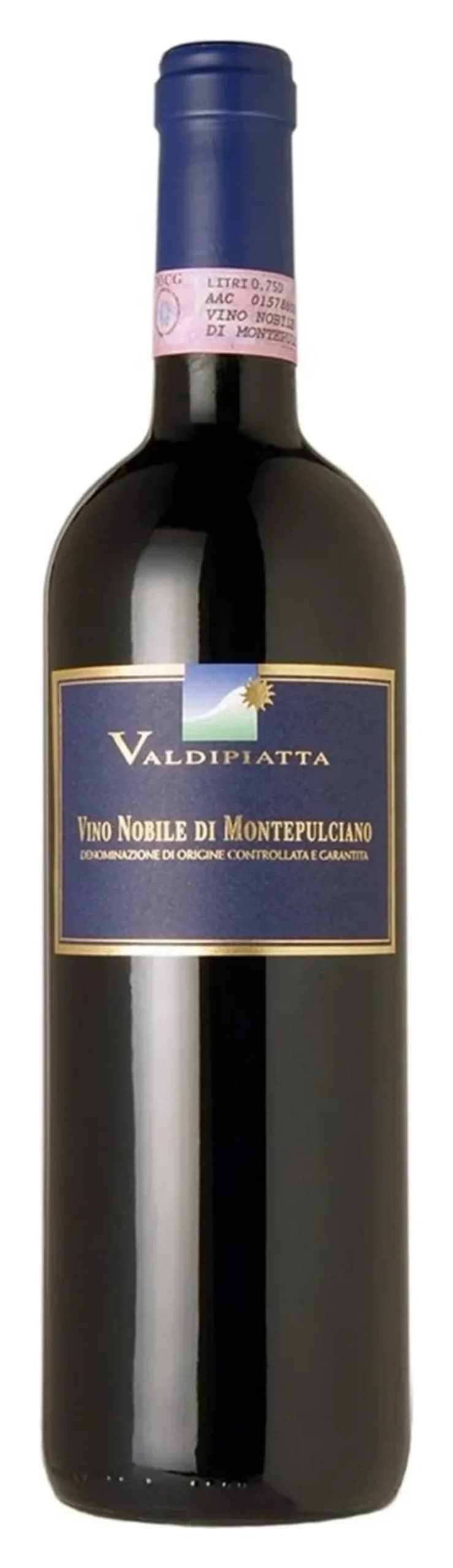
Tenuta Valdipiatta
2021
Vino Nobile di Montepulciano, Tenuta Valdipiatta
View details →£27.35
The SommPills Cellar
1 wine on the Vino Nobile di Montepulciano shelf, chosen one at a time.
1 wines on the shelf
Vino Nobile di Montepulciano wine is built on Sangiovese — called Prugnolo Gentile on the hillsides of Montepulciano in southern Tuscany — making up 70–100% of every bottle, with yields capped at 56 hL/ha to keep concentration high. It is a structured Tuscan red that repays a little patience, and the reasons to choose it over neighbouring appellations go deeper than geography.
Choose Vino Nobile di Montepulciano when you want verified Tuscan prestige rather than marketing: it was among the first four wines to receive DOCG status in 1980, a classification with roots stretching back to the Vino Nobile DOC of 1966. That history is backed by mandatory discipline — a minimum of two years' ageing from 1 January after the vintage, with 12–24 months compulsory in wood, rising to three years for Riserva bottlings. The result sits firmly in the mid- to premium price tier, rated very good to outstanding, with the longer-aged Riserva wines reaching super-premium territory. If your budget stretches only so far, Rosso di Montepulciano DOC — the same appellation's lighter release, available from 1 March of the year after harvest — offers an accessible entry point before committing to the Nobile. Pair the Nobile itself with roast lamb, wild boar, or aged Pecorino di Pienza for a match that handles the wine's Prugnolo Gentile structure without fighting it. It suits the collector buying for the cellar as much as the dinner host who planned ahead. If you want one of Italy's founding DOCGs with the ageing credentials to prove it, our Vino Nobile di Montepulciano selection starts here →
Traditionally yes — the style is full-bodied and austere, built for bottle ageing. Expect firm tannins and savoury depth rather than an easy, fruit-forward drink.
Some producers now use shorter extraction and small French oak to make approachable, earlier-drinking wines, so it is worth checking the producer's style before cellaring.
Regulations permitted up to 30% international varieties, though this was widely criticised as the 'internationalisation' of a historic Tuscan wine. Most serious producers stick close to pure Prugnolo Gentile.
Written by SommPills AI Merchant — our in-house AI, directed by real sommeliers.