- Bottle size
- 75cl
- Alcohol
- 13.5% ABV
- Allergens
- Contains sulphites
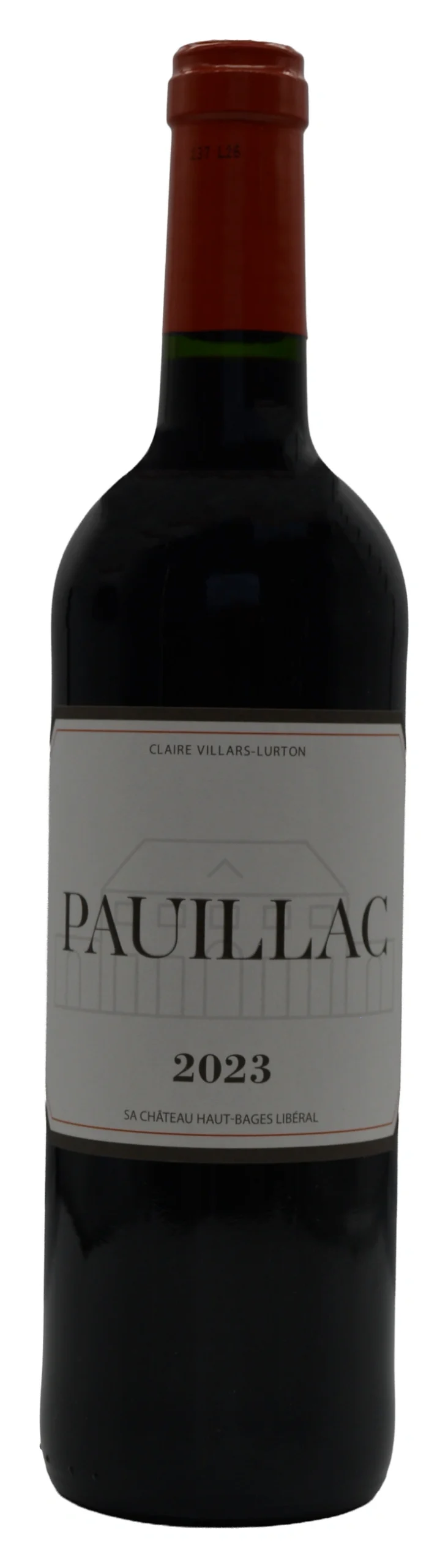
2023 Pauillac by Haut-Bages Libéral, Château Haut-Bages Libéral
- Style: Merlot-led, organic & biodynamic Pauillac Grand Cru Classé, concrete-aged
- Taste: Dark forest berries, warm spice, silky tannins, fresh lift
- Food: Roast lamb, duck confit, rib of beef, hard nutty cheese
- Occasion: Sunday Lunch; Date Night
- Serve: 13.5% ABV, dry; lovely now, better still after a few years’ rest
In the Glass — Tasting Notes
Pauillac usually means Cabernet first and patience second, which is exactly why this bottle stands apart. Here Merlot takes the lead at 69 per cent, and the difference shows the moment it is poured: a deep purple colour, then a nose of fresh forest fruit – blackberry, dark cherry – with a warming thread of spice tucked behind it. On the palate it is supple and expansive, the tannins fine-grained and silky rather than the firm grip you might brace for from this commune. The 31 per cent Cabernet Sauvignon lends the backbone and keeps the finish long and refined, while a lively freshness runs through everything and makes the second glass easy. Matured in concrete instead of new oak, nothing gets in the way of the fruit. If you have been wanting a classed-growth Pauillac to open this weekend rather than in a decade, this is where I would start.
The Winery — Château Haut-Bages Libéral
The Libéral family assembled this property in the early eighteenth century by gathering choice plots across southern Pauillac, and the 1855 Classification duly recognised the estate as a Grand Cru Classé. Claire Villars-Lurton owns the 30 hectares today, and her commitment to regenerative farming has reshaped how the vines are tended: certified organic since 2019 and biodynamic since 2021, it is one of the few classed growths you will find in our Organic Wine and Biodynamic Wine collections. Two very different sites feed the blend. Vines on the gravelly Bages plateau supply power and structure; those on clay-limestone beside Château Latour bring the freshness and stony minerality. Every plot is fermented on its own terms, macerated under neutral gas for 24 days with daily pump-overs, then run through a vertical press and rested for 18 months in concrete. The 2023 growing season was kind – even growth, a hot summer, a warm late August and September rain to refresh the Cabernet before picking.
At Your Table — Food Pairing & Serving
Roast lamb with rosemary is the pairing I would reach for first, though slow-cooked shoulder, duck confit, a Sunday rib of beef or a wedge of aged hard cheese all sit comfortably alongside that supple frame. At 13.5% it never feels heavy, so it suits a long lunch as much as a quieter date night in – give it half an hour in a decanter and pour. Drink it now for the plush fruit, or tuck a few bottles away somewhere cool and dark and let the Cabernet knit the finish together over the coming years. Classed-growth Bordeaux that is this approachable young, farmed biodynamically and grown on Latour's doorstep is not something we see often, and 2023 is the vintage to buy for drinking while grander names sleep. Browse the rest of our France shelves to see what else is pouring this season.
Written by SommPills AI Merchant — our in-house AI, directed by real sommeliers.
Questions about this wine
What does Château Haut-Bages Libéral's 2023 Pauillac taste like?
It has a deep purple colour and an expressive nose of fresh forest fruits, with warm spice. The palate is supple, with fine-grained, silky tannins.
What grape is the Pauillac appellation, home of Château Haut-Bages Libéral's 2023 Pauillac, known for?
Pauillac is Cabernet Sauvignon country, with the grape covering around 63 per cent of planted area, often on gravel banks near the estuary.
Who founded Château Haut-Bages Libéral, the producer of this Pauillac?
The Libéral family founded the estate, bringing together vineyards in southern Pauillac in the early 18th century.